Esophageal and Anorectal Manometry: A Quick Patient Guide
Esophageal and anorectal manometry might sound like complex medical terms, but these are useful diagnostic tests that help doctors understand how certain muscles and parts of the digestive system are functioning.
Both tests measure pressure and muscle activity in different parts of the digestive tract. They can help identify problems that may be causing symptoms such as difficulty swallowing, constipation, or problems controlling bowel movements.
In simple terms: Esophageal manometry evaluates how the food pipe works, while anorectal manometry checks the function and coordination of the muscles around the rectum.
Esophageal Manometry
Esophageal manometry is a medical test that helps doctors understand how your food pipe, or esophagus, works. The esophagus is the tube that carries food and liquids from your mouth to your stomach.
The test checks how well your esophagus squeezes and pushes food down. It can help doctors determine whether the muscles are working properly and whether there may be an underlying problem affecting swallowing.
How Esophageal Manometry Works
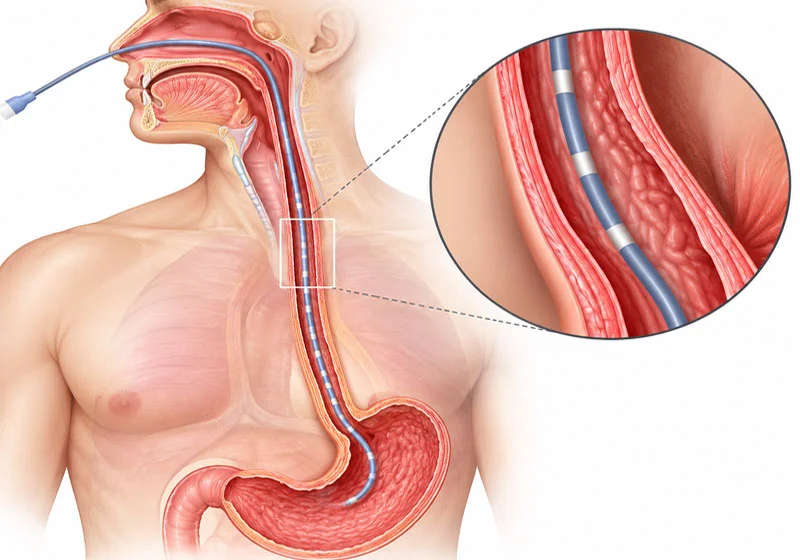
During the test, a thin tube containing small sensors is gently passed through the nose and positioned into the esophagus. You may be asked to swallow several times during the examination.
The sensors measure pressure inside the esophagus and record how the muscles contract and coordinate during swallowing. These measurements give the doctor useful information about how the food pipe is functioning.
When Is Esophageal Manometry Needed?
Your doctor may recommend esophageal manometry if you are experiencing symptoms that could be related to abnormal esophageal movement or muscle function.
- Difficulty or discomfort while swallowing
- Unexplained chest pain
- Acid reflux symptoms that do not improve with usual treatment
- Suspected problems with esophageal muscle movement
- Evaluation of certain swallowing disorders
Anorectal Manometry
Anorectal manometry is a diagnostic test that focuses on the rectum and the muscles surrounding the anus. These muscles play an important role in controlling bowel movements and helping you hold in stool when necessary.
The test helps doctors understand how effectively these muscles work and whether they are coordinating properly during bowel movements.
How Anorectal Manometry Works
For this test, a small tube equipped with sensors is gently placed into the rectum. You may be asked to squeeze and relax the muscles or perform movements similar to those involved when having a bowel movement.
The sensors measure pressure and muscle activity. The information helps doctors assess muscle strength, coordination, and how the rectum and anal muscles respond during different actions.
When Is Anorectal Manometry Needed?
Doctors may recommend anorectal manometry when a person has ongoing bowel movement problems or symptoms that may be related to the muscles and nerves of the anorectal region.
- Chronic constipation
- Difficulty passing stool
- Accidental bowel leakage
- Problems controlling bowel movements
- Suspected anorectal muscle coordination problems
Why These Tests Matter
Esophageal and anorectal manometry provide doctors with important information about how muscles and pressure patterns are working within the digestive system.
By identifying abnormalities in muscle movement or coordination, these tests can help doctors better understand the cause of certain symptoms and plan appropriate treatment.
These tests do more than simply identify symptoms. They help doctors understand how the underlying muscles and nerves are functioning, which can be valuable when determining the next step in evaluation and treatment.
During the Tests
Both tests are generally performed in a clinical setting under the guidance of a trained healthcare professional. Your doctor or medical team will explain the preparation required before the examination and guide you through each step.
You may experience some temporary discomfort during the procedure, but the tests are generally well tolerated. Following the preparation and instructions provided by your healthcare team can help make the examination easier.
What Patients Should Remember
- Esophageal manometry evaluates the movement and pressure of the esophagus.
- Anorectal manometry evaluates the function of the rectum and surrounding muscles.
- Both tests use small tubes with sensors to record muscle pressure and activity.
- They can help investigate swallowing and bowel movement problems.
- Your doctor will explain how to prepare and what to expect before the test.
Conclusion
Esophageal and anorectal manometry may sound complicated, but their purpose is straightforward: they help doctors understand how specific muscles and parts of the digestive system are working.
If your doctor recommends one of these tests, it can provide valuable information about the cause of your symptoms and help guide further evaluation and treatment.
If you have persistent swallowing difficulties, constipation, bowel control problems, or other related symptoms, speak with your doctor to understand whether manometry testing may be appropriate for you.