Fistula Closure
Fistula Closure
Fistula closure is a procedure used to close an abnormal connection between the gastrointestinal tract and another organ, tissue, or the skin.
Gastrointestinal fistulas may develop due to surgery, infection, inflammatory bowel disease, trauma, radiation, or other conditions. They can cause persistent drainage, infection, abdominal discomfort, or nutritional problems.
Depending on the location and size of the fistula, closure may be performed using endoscopic, radiological, or surgical techniques.
Causes of Gastrointestinal Fistula
- Previous gastrointestinal surgery
- Anastomotic leaks
- Crohn's disease and inflammatory bowel disease
- Abdominal infection or abscess
- Trauma
- Radiation-related tissue injury
- Certain gastrointestinal cancers
Symptoms
Symptoms vary depending on the location and type of fistula and may include:
- Persistent wound or abdominal drainage
- Abdominal pain or discomfort
- Fever or recurrent infection
- Leakage of digestive contents
- Nausea or vomiting
- Weight loss or nutritional problems
Endoscopic Fistula Closure
In selected patients, fistulas can be treated through an endoscope without the need for major surgery. The fistula opening is identified and treated using an appropriate closure technique.
Depending on the size and location, the doctor may use clips, over-the-scope clips, endoscopic suturing, tissue sealants, or stents.
Fistula Closure Techniques
Endoscopic Clips
Specialized clips can be placed across smaller fistula openings to bring the tissue edges together and promote healing.
Over-the-Scope Clip (OTSC)
An OTSC is a larger clip designed to grasp and close selected larger or deeper gastrointestinal defects.
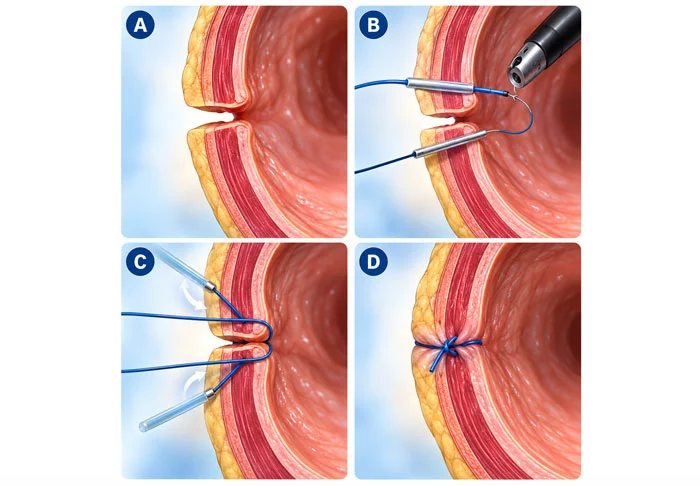
Endoscopic Suturing
Specialized endoscopic suturing systems can be used to close selected larger defects or fistulous openings.
Stent Placement
In selected postoperative leaks and fistulas, an endoscopic stent may help divert gastrointestinal contents away from the defect and support healing.
Evaluation Before Treatment
The fistula is assessed to determine its location, size, cause, and surrounding tissue condition.
Depending on the case, evaluation may include endoscopy, CT scan, MRI, contrast studies, or other imaging. Any associated abscess or infection may also need treatment.
What Happens During the Procedure?
The patient is prepared and monitored during the procedure. The endoscope is advanced to the fistula opening and the area is carefully examined.
The selected closure technique, such as clip placement, suturing, sealant application, or stent placement, is then performed.
After treatment, the patient is monitored and follow-up may be recommended to confirm successful closure.
Benefits of Endoscopic Fistula Closure
- Minimally invasive treatment
- Direct visualization of the fistula
- Targeted closure of the abnormal opening
- May avoid major surgery in selected cases
- Multiple closure techniques are available
- Usually involves shorter recovery than major surgery
Possible Risks
- Bleeding
- Infection
- Perforation or tissue injury
- Stent migration when a stent is used
- Recurrence or reopening of the fistula
- Need for repeat treatment
Follow-up
Follow-up is important after fistula closure. The doctor may monitor for recurrent drainage, abdominal pain, fever, infection, or persistent leakage.
Repeat endoscopy or imaging may be required to confirm healing and determine whether additional treatment is necessary.
When Should You Consult a Specialist?
Patients with persistent gastrointestinal drainage, recurrent abdominal infection, postoperative leakage, unexplained abdominal pain, fever, or suspected fistula should undergo specialist evaluation.
The gastroenterologist can determine whether endoscopic closure, stent placement, drainage, or surgery is appropriate.
Conclusion
Fistula closure provides a minimally invasive treatment option for selected gastrointestinal fistulas. Techniques such as clips, OTSC, endoscopic suturing, sealants, and stents may be used depending on the fistula's characteristics.
Appropriate treatment of infection, the underlying cause, nutritional status, and regular follow-up are important for successful healing.