Therapeutic EUS
Therapeutic EUS
Therapeutic Endoscopic Ultrasound (EUS) is an advanced minimally invasive technique that combines endoscopy and real-time ultrasound imaging to perform selected diagnostic and therapeutic procedures.
Unlike conventional EUS, which is primarily used for imaging and tissue sampling, therapeutic EUS allows specialists to create controlled access to nearby organs, ducts, fluid collections and vascular structures for treatment. Therapeutic EUS may be useful in selected patients when conventional endoscopic or surgical approaches are difficult, unsuitable, or require an alternative minimally invasive approach.
What is Therapeutic EUS?
Therapeutic EUS uses an ultrasound-equipped endoscope to visualize structures located next to the gastrointestinal tract. The ultrasound image helps the specialist identify the target and safely guide therapeutic instruments.
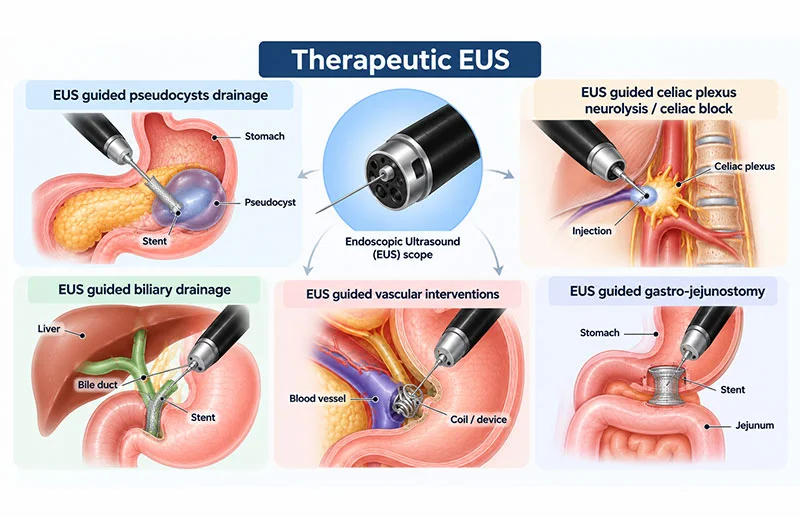
Depending on the clinical situation, EUS can be used to drain fluid collections, provide access to the biliary system, deliver treatment around the celiac plexus, perform selected vascular procedures, or create a connection between parts of the gastrointestinal tract.
- Real-Time Imaging: Ultrasound allows continuous visualization of the target area.
- Precise Targeting: Therapeutic instruments can be guided toward selected structures.
- Minimally Invasive: Selected procedures can be performed through the gastrointestinal tract.
- Alternative Access: EUS may provide an alternative route when conventional endoscopic access is difficult.
EUS Guided Pseudocysts Drainage
EUS-guided pseudocyst drainage is a minimally invasive technique used to drain selected pancreatic pseudocysts and other appropriate pancreatic fluid collections into the gastrointestinal tract.
EUS helps identify the fluid collection and its relationship with nearby organs and blood vessels. Under EUS guidance, a controlled opening can be created between the collection and the stomach or duodenum, allowing the contents to drain internally.
- Pancreatic Pseudocysts: Selected symptomatic or persistent pseudocysts may be considered for endoscopic drainage.
- Fluid Collections: EUS helps assess the size, location and internal characteristics of pancreatic fluid collections.
- Safe Access: Ultrasound helps identify nearby blood vessels and other structures before drainage.
- Internal Drainage: A stent may be placed to establish drainage between the collection and the stomach or duodenum.
- Follow-Up: Imaging and clinical follow-up may be required after drainage.
EUS Guided Celiac Plexus Neurolysis / Celiac Block
The celiac plexus is a network of nerves located in the upper abdomen that carries pain signals from several abdominal organs. EUS can be used to identify the region of the celiac plexus and guide targeted injection.
EUS-guided celiac plexus interventions may be considered for selected patients with significant abdominal pain, particularly pain associated with advanced pancreatic disease.
- Celiac Plexus Block: Medication such as a local anesthetic and/or steroid may be injected around the celiac plexus to help reduce pain.
- Celiac Plexus Neurolysis: A neurolytic agent may be used in selected patients, particularly when longer-lasting pain relief is required in appropriate clinical situations.
- Ultrasound Guidance: EUS allows visualization of the target region and surrounding structures during the procedure.
- Pain Management: The procedure may be considered as part of a broader pain management plan.
EUS Guided Biliary Drainage
EUS-guided biliary drainage is an advanced technique that can provide an alternative route for bile drainage when conventional ERCP is unsuccessful, not possible, or unsuitable in selected patients.
Using EUS, the specialist identifies the biliary system and creates a controlled access route to establish drainage into the gastrointestinal tract.
- Failed ERCP: EUS-guided drainage may be considered when conventional ERCP cannot achieve adequate biliary drainage.
- Altered Anatomy: It may provide an alternative approach in selected patients with surgically altered gastrointestinal anatomy.
- Biliary Obstruction: Selected malignant or benign biliary obstructions may require drainage.
- Stent Placement: A suitable stent may be placed to establish and maintain bile drainage.
- Targeted Access: EUS provides real-time imaging during access to the biliary system.
EUS Guided Vascular Interventions
EUS-guided vascular interventions use real-time ultrasound to identify selected blood vessels and guide specialized needles or devices during carefully selected therapeutic procedures.
The close proximity of the gastrointestinal tract to certain vascular structures allows EUS to provide targeted access in appropriately selected cases.
- Vascular Visualization: EUS can identify blood vessels and their relationship to surrounding structures.
- Real-Time Guidance: Ultrasound provides continuous visualization during selected interventions.
- Targeted Therapy: Certain specialized vascular procedures may be performed under EUS guidance in appropriate cases.
- Specialist Expertise: These procedures require advanced equipment and experience in therapeutic EUS and vascular interventions.
EUS Guided Gastro-Jejunostomy
EUS-guided gastro-jejunostomy is an advanced endoscopic procedure that creates a connection between the stomach and a suitable segment of the small intestine, allowing food to bypass an obstructed portion of the gastrointestinal tract.
EUS is used to identify an appropriate jejunal loop and guide placement of a specialized stent between the stomach and small intestine.
- Gastric Outlet Obstruction: The technique may be considered for selected patients with obstruction affecting the normal passage of food from the stomach.
- Duodenal Obstruction: Selected obstructions involving the duodenum may be bypassed using this approach.
- Enteral Access: The created connection can provide an alternative route for the passage of food.
- Stent Placement: A specialized lumen-apposing stent may be used to maintain the newly created connection.
- Minimally Invasive Approach: The procedure is performed endoscopically without conventional open surgery.
When May Therapeutic EUS Be Considered?
Therapeutic EUS may be considered when a patient has a condition that can be treated through an EUS-guided approach and when conventional treatment options are unsuccessful, unsuitable or technically difficult.
- Selected pancreatic fluid collections requiring drainage
- Abdominal pain requiring celiac plexus intervention
- Biliary obstruction requiring alternative drainage
- Selected vascular conditions requiring EUS-guided intervention
- Gastric outlet or duodenal obstruction requiring enteral bypass
- Selected cases where conventional endoscopic access is difficult
Preparation Before Therapeutic EUS
Preparation depends on the specific therapeutic procedure being performed. Patients may receive detailed instructions regarding fasting, medications, blood-thinning medicines and anesthesia.
- Fasting: Follow the fasting instructions provided by the medical team.
- Medication Review: Inform the doctor about all current medications.
- Blood Thinners: Tell the medical team if you are taking anticoagulant or antiplatelet medicines.
- Medical History: Inform the doctor about allergies and existing medical conditions.
- Imaging Review: Previous CT, MRI, MRCP, PET or other imaging may be reviewed before the procedure.
After Therapeutic EUS
Patients are monitored after the procedure, particularly when sedation or anesthesia has been used. The duration of observation depends on the type of therapeutic intervention performed.
Diet, medications and activity restrictions may vary depending on the procedure. Patients with newly placed stents may require specific follow-up and monitoring.
Severe abdominal pain, fever, vomiting, bleeding, difficulty swallowing, jaundice or other concerning symptoms should be reported to the treating medical team promptly.
Benefits of Therapeutic EUS
- Provides real-time ultrasound guidance during treatment
- Allows targeted access to selected structures
- Can provide minimally invasive treatment through the gastrointestinal tract
- May provide alternative treatment options when conventional approaches are difficult
- Can combine imaging and therapy during the same endoscopic procedure
- May reduce the need for more invasive approaches in selected patients
Possible Risks
Therapeutic EUS involves advanced endoscopic techniques and, like other invasive procedures, may have potential risks. The risks vary depending on the specific procedure performed.
- Bleeding
- Infection
- Perforation or leakage
- Stent migration or blockage
- Abdominal pain or discomfort
- Pancreatitis in selected pancreatic or biliary procedures
- Reaction to sedation or anesthesia
- Procedure-specific complications
Follow-Up After Therapeutic EUS
Follow-up depends on the procedure performed and the underlying medical condition. Clinical assessment and imaging may be recommended to evaluate treatment response.
Patients with temporary or removable stents may require a planned follow-up procedure for assessment, exchange or removal.
The treating specialist will provide an individualized follow-up plan based on the procedure and clinical findings.
Conclusion
Therapeutic EUS has expanded the role of endoscopic ultrasound from diagnosis to minimally invasive treatment of selected gastrointestinal, pancreatic, biliary and other conditions.
Advanced procedures including EUS-guided pseudocyst drainage, celiac plexus neurolysis or block, biliary drainage, vascular interventions and gastro-jejunostomy can provide targeted treatment in appropriately selected patients.
Because these are advanced procedures, treatment decisions should be made by an experienced multidisciplinary team based on the patient's condition, anatomy and available treatment options.