Esophageal Stricture
Esophageal Stricture
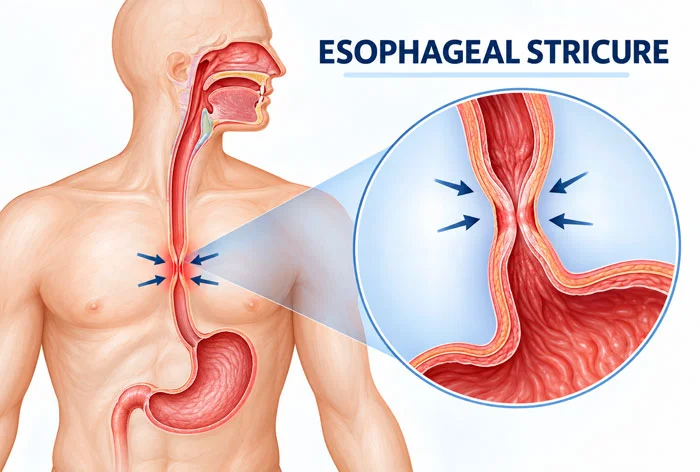
Esophageal stricture is an abnormal narrowing of the esophagus that can make it difficult for food and liquids to pass normally from the mouth to the stomach. It commonly develops due to scarring or inflammation of the esophageal lining.
Esophageal strictures may occur as a result of long-standing acid reflux, previous corrosive injury, certain medical procedures, infections, or other conditions affecting the esophagus. The severity of symptoms depends on the degree and location of the narrowing.
Symptoms of Esophageal Stricture
The symptoms of an esophageal stricture usually develop gradually and may become more noticeable as the narrowing increases.
- Difficulty Swallowing: Food may feel difficult to move through the esophagus, particularly solid foods.
- Food Getting Stuck: A sensation that food is lodged in the throat or chest may occur.
- Painful Swallowing: Some patients may experience pain or discomfort while swallowing.
- Regurgitation: Food or liquids may come back into the mouth after swallowing.
- Chest Discomfort: Narrowing of the esophagus may cause pressure or discomfort behind the breastbone.
- Unintentional Weight Loss: Difficulty eating may result in reduced food intake and weight loss.
- Coughing While Eating: Difficulty moving food safely through the esophagus may sometimes cause coughing during meals.
Causes of Esophageal Stricture
Esophageal strictures can develop due to inflammation, injury, scarring, or abnormal growth within the esophagus.
- Gastroesophageal Reflux Disease: Long-standing acid reflux can cause repeated inflammation and scarring of the esophagus.
- Corrosive Ingestion: Swallowing strong acids or alkalis can cause severe injury followed by scar formation and narrowing.
- Esophageal Cancer: A tumor can narrow the esophageal passage and cause swallowing difficulties.
- Previous Esophageal Surgery or Procedures: Scar tissue may develop after certain procedures involving the esophagus.
- Radiation Therapy: Radiation involving the chest or upper digestive tract can occasionally cause delayed scarring.
- Infections: Certain infections can cause inflammation and injury to the esophageal lining.
- Eosinophilic Esophagitis: Chronic inflammation associated with eosinophilic esophagitis may contribute to esophageal narrowing.
Types of Esophageal Stricture
Esophageal strictures may be classified according to their cause, location, and characteristics.
- Benign Stricture: Narrowing caused by conditions such as acid reflux, corrosive injury, inflammation, or scarring rather than cancer.
- Malignant Stricture: Narrowing caused by an esophageal tumor or other cancerous growth.
- Simple Stricture: A short and relatively straight narrowing that can often be treated endoscopically.
- Complex Stricture: A longer, irregular, or severely narrowed segment that may require repeated or specialized treatment.
Diagnosis of Esophageal Stricture
Diagnosis involves identifying the location and severity of the narrowing while determining its underlying cause.
- Upper GI Endoscopy: A flexible camera is used to directly examine the esophagus and identify the narrowed area.
- Biopsy: Tissue samples may be taken during endoscopy when inflammation, eosinophilic esophagitis, or cancer needs to be evaluated.
- Barium Swallow: An X-ray examination using contrast material can show the location, length, and severity of the narrowing.
- CT Scan: Imaging may be recommended when an external compression, tumor, or other structural abnormality is suspected.
- Additional Testing: Further tests may be advised depending on the suspected underlying cause.
Treatment Options
Treatment depends on the cause, severity, location, and characteristics of the stricture. The main goals are to improve swallowing, treat the underlying condition, and prevent recurrence.
- Endoscopic Dilatation: A narrowed esophageal segment can be gently widened using specialized balloons or dilators.
- Medications: Acid-suppressing medicines may be prescribed when reflux is responsible for inflammation and scarring.
- Steroid Injection: In selected recurrent strictures, medication may be injected into the narrowed area during endoscopy.
- Endoscopic Incision: Selected complex or recurrent strictures may require specialized endoscopic techniques to release scar tissue.
- Esophageal Stenting: A temporary or palliative stent may be considered in selected cases, particularly when narrowing is related to cancer.
- Treatment of the Underlying Cause: Managing reflux, eosinophilic esophagitis, corrosive injury, or other underlying conditions is important to reduce recurrence.
- Surgery: Surgical treatment may be considered in selected severe or treatment-resistant strictures.
Endoscopic Dilatation
Endoscopic dilatation is one of the most commonly used treatments for benign esophageal strictures. During the procedure, a balloon or specialized dilator is carefully passed through the narrowed area to gradually widen the esophageal passage.
Some patients may require more than one dilatation session, particularly when the stricture is severe, long, or prone to recurrence.
Possible Complications
Untreated or severe esophageal strictures can interfere with normal eating and drinking and may lead to complications.
- Food Impaction: Food may become lodged at the narrowed portion of the esophagus.
- Malnutrition: Persistent difficulty swallowing may result in inadequate nutritional intake.
- Dehydration: Difficulty swallowing liquids can lead to insufficient fluid intake.
- Weight Loss: Reduced food intake may result in unintended weight loss.
- Aspiration: Food or liquid may enter the airway in patients with significant swallowing problems.
- Recurrent Stricture: Some strictures may return even after successful treatment.
Prevention of Recurrence
Preventing recurrence depends largely on treating the condition responsible for the stricture.
- Control Acid Reflux: Appropriate treatment of GERD can help reduce repeated inflammation and scarring.
- Follow Medical Treatment: Medicines prescribed for reflux or inflammatory conditions should be taken as advised.
- Regular Follow-Up: Patients with recurrent strictures may require periodic evaluation by a specialist.
- Appropriate Dietary Habits: Following dietary recommendations after treatment may help improve swallowing and recovery.
- Early Evaluation: New or worsening swallowing difficulty should be evaluated promptly.
When to Consult a Specialist?
Persistent or worsening difficulty swallowing, food getting stuck, painful swallowing, unexplained weight loss, or repeated regurgitation should be evaluated by a gastroenterologist or esophageal specialist.
Early diagnosis of an esophageal stricture can help identify its underlying cause and allow appropriate treatment before significant swallowing problems or nutritional complications develop.
Timely endoscopic evaluation and appropriate treatment can help restore the normal passage of food and improve quality of life.