- Home
- Know Your Consultant
- Our Specialisations
-
Diseases We Treat
- Endoscopy and Other Procedures We Do
- Upper GI tract endoscopy
- Colonoscopy
- Sigmoidoscopy
- Management of gastrointestinal bleeds – variceal banding, sclerotherapy, dennis stents, hemoclips placement, Argon plasma coagulation
- Stricture dilatation
- Fistula closure
- Esophageal stenting for malignancies
- Achalasia cardia dilatation
- Colonic decompression
- Endosonography (EUS)
Diagnostic procedureFine needle aspiration cytology or biopsies- Third space endoscopy
- Motility
High resolution esophageal manometry forAnorectal manometry for- Blog
- Home
- Know Your Consultant
- Our Specialisations
- Diseases We Treat
- Gastroesophageal reflux disease
- Dysphagia
- Esophageal varices
- Cancers
- Corrosive ingestion
- Esophageal stricture
- Achalasia cardia
- Noncardiac chest pain
- Fistulae
- Dysmotility
- Postoperative issues
- Eosinophilic esophagitis
- Foreign body ingestion
- Dyspepsia
- Peptic ulcer disease
- Gastric cancers
- Bleeding
- Gastroparesis
- Altered anatomy-related issues
- Postoperative issues
- Foreign body ingestion
- Acute and chronic diarrhea
- Inflammatory bowel diseases
- Intestinal obstruction
- Malabsorption
- Irritable bowel syndrome
- Intestinal cancers
- Intestinal bleed
- Constipation – difficult to treat
- Constipation – difficult to treat
- Incontinence
- Anorectal/ defecatory disorders which need Anorectal evaluation
- Solitary rectal ulcer syndrome
- Acute and chronic pancreatitis
- Recurrent acute pancreatitis
- Pancreatic malignancies
- Pancreatic space-occupying lesions or cysts
- Autoimmune pancreatitis
- Gallstone diseases
- CBD stones/strictures / malignancies
- Post-operative issues
- Intra-abdominal masses evaluation
- Mesenteric diseases
- Ascites cirrhotic and non-cirrhotic
- Gastro-intestinal and liver disease as part of other systemic diseases
- Retroviral other immunity related gastrointestinal and liver issues
- Jaundice for evaluation
- Vascular diseases of the liver
- Liver malignancies
- Any space-occupying lesion
- Evaluation for transplant
- Acute liver failure
- Hepatitis/cirrhosis
- Viral
- Alcoholic
- Wilson
- Autoimmune
- NAFLD
- Others and Cryptogenic
- Endoscopy and Other Procedures We Do
- Upper GI tract endoscopy
- Colonoscopy
- Sigmoidoscopy
- Management of gastrointestinal bleeds – variceal banding, sclerotherapy, dennis stents, hemoclips placement, Argon plasma coagulation
- Stricture dilatation
- Fistula closure
- Esophageal stenting for malignancies
- Achalasia cardia dilatation
- Colonic decompression
- PEG –Percutaneous endoscopic gastrostomy tube placement
- Colonic stricture dilatation and colonic stent placement
- ERCP
- Bile duct and pancreatic stones
- Bile duct and pancreatic leaks
- Bile duct and pancreatic strictures
- Pancreato-biliary cancers
- Spiral enteroscopy
- Cholangio-pancreatoscopy
- Endosonography (EUS)
Diagnostic procedure- For pancreato-biliary diseases
- Superficial cancers staging
- Submucosal lesions assessment
- Submucosal lesions assessment
Fine needle aspiration cytology or biopsies- Pancreatic malignancies
- Cystic lesions in pancreas
- Biliary or other malignancies
- Intrabdominal/intra-thoracic lymphadenopathy
Therapeutic EUS- EUS guided pseudocysts drainage
- EUS guided celiac plexus neurolysis/celiac block
- EUS guided biliary drainage
- EUS guided vascular interventions
- EUS guided gastro-jejunostomy
- Third space endoscopy
- Per-oral endoscopic myotomy
- Endoscopic submucosal dissection
- Endoscopic full thickness resection
- Motility
High resolution esophageal manometry for- Dysmotility
- Achalasia cardia
- Preoperative before Fundoplication
Anorectal manometry for- Defecatory disorders
- Anorectal dyssynergia
- Biofeedback therapy for Anorectal disorders
- Blog
- Endoscopy and Other Procedures We Do
Intestinal Cancers
Intestinal Cancers
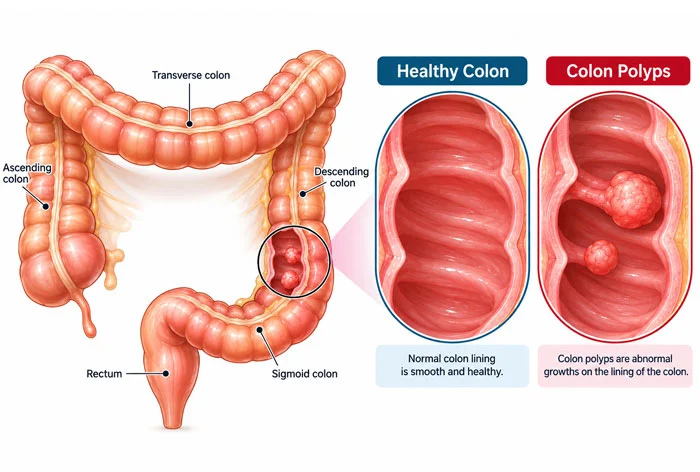
Intestinal cancers develop when abnormal cells in the small or large intestine begin to grow uncontrollably. Depending on their location, they may affect digestion, bowel movements, or the passage of intestinal contents.
Some intestinal cancers may develop gradually and cause few symptoms in the early stages. Persistent changes in bowel habits, abdominal discomfort, unexplained weight loss, or bleeding should be evaluated by a specialist.
Common Symptoms
- Changes in Bowel Habits: Persistent diarrhea, constipation, or changes in stool pattern.
- Blood in Stools: Bleeding may appear as visible blood or dark stools.
- Abdominal Pain: Persistent cramps, discomfort, or fullness.
- Unexplained Weight Loss: Losing weight without a clear reason.
- Fatigue: Persistent tiredness, sometimes related to anemia from blood loss.
- Vomiting or Nausea: May occur when a tumour affects the normal passage of intestinal contents.
- Loss of Appetite: Reduced desire to eat may occur in some patients.
Types of Intestinal Cancer
Intestinal cancers can develop in different parts of the digestive tract and include several types.
- Small Intestinal Cancer: Tumours that develop in the small intestine.
- Colorectal Cancer: Cancer affecting the colon or rectum.
- Neuroendocrine Tumours: Tumours arising from specialized neuroendocrine cells.
- Lymphoma: Cancer involving lymphatic tissue within the digestive tract.
- Gastrointestinal Stromal Tumours: Tumours that can arise from specialized cells within the digestive tract.
Risk Factors
The risk of intestinal cancer may be influenced by age, family history, certain inherited conditions, inflammatory bowel diseases, smoking, obesity, dietary factors, and other medical conditions. Risk varies depending on the specific type and location of cancer.
Diagnosis
Diagnosis depends on the suspected location and type of cancer. Investigations may include:
- Blood Tests: May help identify anemia and other abnormalities.
- Stool Tests: May detect hidden blood in the stool.
- Colonoscopy: Allows direct examination of the colon and rectum and enables biopsy when required.
- Upper GI Endoscopy: May be used when the upper digestive tract or certain parts of the small intestine need evaluation.
- CT or MRI: Imaging may help assess the tumour and surrounding structures.
- Biopsy: Tissue examination is used to confirm the diagnosis.
Staging
Once cancer is diagnosed, staging helps determine how far it has developed. Doctors assess the size and depth of the tumour, involvement of nearby lymph nodes, and whether the cancer has spread to other parts of the body.
Treatment
Treatment depends on the type, location, stage, and overall health of the patient. It may involve one or more of the following:
- Surgery: Removal of the tumour and, when necessary, nearby affected tissue or lymph nodes.
- Chemotherapy: Medicines used to destroy or control cancer cells.
- Radiation Therapy: May be used for selected intestinal or colorectal cancers.
- Targeted Therapy: Medicines designed to act on specific characteristics of certain cancer cells.
- Immunotherapy: May be suitable for selected cancers with specific biological features.
Possible Complications
Depending on its location and stage, intestinal cancer may cause bleeding, intestinal obstruction, perforation, anemia, nutritional problems, or spread to other organs.
Importance of Early Diagnosis
Some intestinal cancers may not cause obvious symptoms in their early stages. Persistent digestive symptoms or unexplained changes in bowel habits should not be ignored. Early evaluation can help identify the cause and determine appropriate treatment.
When to Consult a Specialist?
Consult a gastroenterologist if you experience persistent changes in bowel habits, blood in stools, unexplained weight loss, ongoing abdominal pain, persistent fatigue, or recurrent vomiting.
Timely diagnosis and appropriate treatment can help manage intestinal cancer and its associated complications.
- Home
- Know Your Consultant
- Our Specialisations
- Diseases We Treat
- Endoscopy and Other Procedures We Do
- Upper GI tract endoscopy
- Colonoscopy
- Sigmoidoscopy
- Management of gastrointestinal bleeds
- Stricture dilatation
- Fistula closure
- Esophageal stenting for malignancies
- Achalasia cardia dilatation
- Colonic decompression
- PEG
- Colonic stricture dilatation and colonic stent placement
- Endo-sonography (EUS)
- Therapeutic EUS
- Third space endoscopy
- Motility
- Blog