Esophageal Cancer
Esophageal Cancer
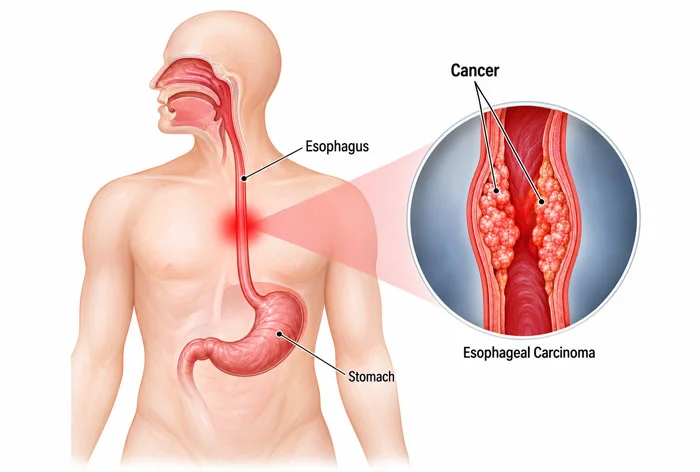
Esophageal cancer is a type of cancer that develops in the lining of the esophagus, the muscular tube that carries food and liquids from the mouth to the stomach. It can develop in different parts of the esophagus and may affect swallowing as the tumor grows.
The two main types of esophageal cancer are esophageal squamous cell carcinoma and adenocarcinoma. Early diagnosis is important because treatment options and outcomes can vary depending on the type, stage, location, and overall health of the patient.
Symptoms of Esophageal Cancer
Esophageal cancer may not cause noticeable symptoms during its early stages. As the disease progresses, symptoms may include:
- Difficulty Swallowing: A feeling that food is getting stuck in the throat or chest, which may gradually become worse.
- Painful Swallowing: Pain or discomfort while swallowing food or liquids.
- Unintentional Weight Loss: Difficulty eating and changes in appetite may result in unexplained weight loss.
- Chest or Upper Abdominal Discomfort: Some patients may experience pain, pressure, or burning behind the breastbone.
- Persistent Heartburn: Frequent or worsening heartburn may occur in some patients.
- Regurgitation: Food or liquids may come back into the mouth after swallowing.
- Persistent Cough: A chronic cough may occur, particularly when swallowing.
- Hoarseness: Changes in the voice may occur when nearby nerves or structures are affected.
- Vomiting or Bleeding: Advanced disease may sometimes cause vomiting or bleeding from the digestive tract.
Types of Esophageal Cancer
The two most common types of esophageal cancer are classified according to the type of cells where the cancer begins.
- Squamous Cell Carcinoma: This cancer develops from the flat cells lining the inside of the esophagus and can occur anywhere along the esophagus.
- Adenocarcinoma: This cancer develops from glandular cells and commonly occurs in the lower part of the esophagus, often in association with long-standing acid reflux and Barrett's esophagus.
Risk Factors for Esophageal Cancer
Several factors may increase the risk of developing esophageal cancer.
- Chronic Acid Reflux: Long-term gastroesophageal reflux disease may damage the lining of the esophagus.
- Barrett's Esophagus: Changes in the lining of the lower esophagus associated with chronic reflux can increase the risk of adenocarcinoma.
- Tobacco Use: Smoking and other forms of tobacco use are associated with an increased risk of esophageal cancer.
- Alcohol Consumption: Heavy alcohol consumption is associated with an increased risk, particularly when combined with tobacco use.
- Obesity: Excess body weight is associated with an increased risk of adenocarcinoma of the esophagus.
- Age: The risk generally increases with age.
- Achalasia: Long-standing achalasia can increase the risk of esophageal cancer.
- Previous Esophageal Injury: Certain long-term injuries or abnormalities of the esophagus may increase cancer risk.
Diagnosis of Esophageal Cancer
Diagnosis usually begins with a detailed medical history and physical examination. Several tests may be performed to confirm the diagnosis and determine the extent of the disease.
- Upper GI Endoscopy: A flexible camera is used to examine the esophagus and identify abnormal areas or growths.
- Biopsy: During endoscopy, tissue samples may be collected and examined under a microscope to confirm the presence and type of cancer.
- Endoscopic Ultrasound: This test helps evaluate how deeply the tumor has grown into the esophageal wall and may assess nearby lymph nodes.
- CT Scan: CT imaging may be used to evaluate the esophagus, chest, abdomen, and nearby structures for possible spread.
- PET-CT Scan: PET-CT may be used in selected patients to identify areas of active cancer and assess possible spread to distant organs.
- Contrast Studies: A barium swallow may help evaluate the shape and passage of the esophagus when swallowing difficulties are present.
Stages of Esophageal Cancer
Esophageal cancer is staged according to the size and depth of the tumor, involvement of nearby lymph nodes, and spread to other parts of the body.
- Early-Stage Cancer: The cancer is limited to the superficial layers of the esophagus and may be suitable for local endoscopic treatment in selected patients.
- Localized Cancer: The tumor may extend deeper into the esophageal wall but remains without distant spread.
- Lymph Node Involvement: Cancer may spread to nearby lymph nodes and require multimodal treatment.
- Advanced Cancer: Cancer may spread to distant organs or structures, requiring systemic or palliative treatment approaches.
Treatment for Esophageal Cancer
Treatment depends on the type and stage of cancer, its location, overall health, and the patient's individual treatment plan. Management may involve one or more treatment approaches.
- Endoscopic Treatment: Selected very early cancers may be treated using endoscopic techniques such as endoscopic mucosal resection or endoscopic submucosal dissection.
- Surgery: Esophagectomy may be recommended for selected patients with localized or locally advanced disease.
- Chemotherapy: Anti-cancer medicines may be used before or after surgery or as part of treatment for advanced disease.
- Radiation Therapy: Radiation may be combined with chemotherapy before surgery or used in selected treatment settings.
- Chemoradiotherapy: A combination of chemotherapy and radiation may be used for certain locally advanced cancers.
- Targeted Therapy: Medicines directed at specific molecular features of the cancer may be considered when appropriate.
- Immunotherapy: Selected patients may benefit from medicines that help the immune system recognize and attack cancer cells.
- Palliative Treatment: Treatments such as esophageal stenting may help relieve swallowing difficulty in advanced disease.
Possible Complications
Esophageal cancer and its treatment may result in various complications depending on the stage and location of the disease.
- Severe Difficulty Swallowing: A growing tumor may narrow the esophagus and make eating and drinking difficult.
- Malnutrition: Reduced food intake may lead to nutritional deficiencies and weight loss.
- Dehydration: Difficulty swallowing liquids can result in inadequate fluid intake.
- Bleeding: Tumors may occasionally cause bleeding within the digestive tract.
- Spread of Cancer: Advanced cancer may spread to lymph nodes or distant organs.
- Breathing Problems: Large tumors or cancer spread to nearby structures may affect breathing or the airway.
Prevention and Risk Reduction
Not all cases of esophageal cancer can be prevented, but certain lifestyle measures may help reduce risk.
- Avoid Tobacco: Avoiding smoking and tobacco products can reduce the risk of esophageal cancer.
- Limit Alcohol: Limiting alcohol consumption may reduce cancer risk.
- Maintain a Healthy Weight: Maintaining a healthy body weight may help reduce the risk of esophageal adenocarcinoma.
- Manage Acid Reflux: Appropriate evaluation and treatment of persistent GERD can help protect the esophageal lining.
- Regular Follow-Up: People with Barrett's esophagus may require periodic endoscopic surveillance as advised by their specialist.
When to Consult a Specialist?
Persistent difficulty swallowing, unexplained weight loss, painful swallowing, recurrent vomiting, persistent heartburn, or other concerning digestive symptoms should be evaluated by a gastroenterologist.
Early evaluation of persistent swallowing difficulties can help identify esophageal abnormalities at an earlier stage and allow appropriate treatment when needed.
Timely diagnosis and a multidisciplinary treatment approach can help manage esophageal cancer and improve symptom control and overall care.