Upper GI Tract Endoscopy
Upper GI Tract Endoscopy
Upper GI tract endoscopy, also known as upper gastrointestinal endoscopy or gastroscopy, is a procedure used to examine the lining of the upper digestive system. It allows a gastroenterologist to directly visualize the food pipe (esophagus), stomach, and first part of the small intestine (duodenum).
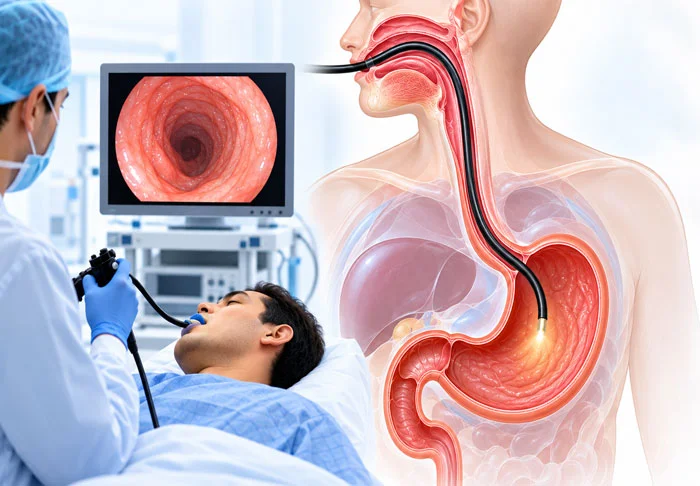
The procedure is performed using a thin, flexible tube called an endoscope, which has a camera and light at its tip. The images are displayed on a monitor, allowing the doctor to identify inflammation, ulcers, bleeding, growths, narrowing, and other abnormalities.
Upper GI endoscopy can also be used for biopsy and certain therapeutic procedures, making it an important diagnostic and treatment tool for many digestive disorders.
Why is Upper GI Endoscopy Performed?
Upper GI endoscopy may be recommended when a patient has persistent digestive symptoms or when further evaluation of the esophagus, stomach, or duodenum is required.
- Persistent heartburn or acid reflux: To assess the esophagus for inflammation or other changes.
- Difficulty swallowing: To identify narrowing, inflammation, rings, or other causes of dysphagia.
- Persistent upper abdominal pain: To investigate possible ulcers, gastritis, or other abnormalities.
- Recurrent vomiting: To evaluate the upper digestive tract when symptoms persist.
- Unexplained weight loss: To look for structural or inflammatory causes.
- Gastrointestinal bleeding: To identify the source of bleeding such as an ulcer or bleeding vessel.
- Iron-deficiency anemia: To investigate possible bleeding or other abnormalities in the upper GI tract.
- Abnormal imaging findings: To directly evaluate abnormalities detected on scans or other tests.
What Does Upper GI Endoscopy Examine?
During the procedure, the endoscope is carefully passed through the mouth and advanced through the upper digestive tract. The doctor examines the lining of several structures.
Esophagus
The esophagus is examined for inflammation, ulcers, narrowing, strictures, abnormal growths, Barrett's esophagus, and other changes that may be associated with acid reflux or other conditions.
Stomach
The stomach lining is assessed for gastritis, ulcers, polyps, bleeding, abnormal growths, and other structural changes. Biopsies may be taken when required.
Duodenum
The first portion of the small intestine, known as the duodenum, is examined for inflammation, ulcers, abnormal mucosal changes, and other conditions.
Conditions That Can Be Evaluated
Upper GI endoscopy can help diagnose or evaluate a wide range of gastrointestinal conditions, including:
- Gastroesophageal Reflux Disease (GERD)
- Esophagitis
- Barrett's esophagus
- Esophageal strictures
- Gastritis
- Peptic ulcer disease
- Gastric polyps
- Gastric and esophageal cancers
- Duodenal ulcers
- Upper gastrointestinal bleeding
- Other abnormalities of the upper digestive tract
Biopsy During Endoscopy
One of the important advantages of upper GI endoscopy is the ability to obtain small tissue samples, known as biopsies, from areas that appear abnormal or from specific parts of the digestive tract when clinically indicated.
Biopsies may be used to evaluate conditions such as Helicobacter pylori infection, inflammation, celiac disease, Barrett's esophagus, precancerous changes, and suspected cancers.
Taking a biopsy is generally painless because the digestive tract lining does not sense the biopsy in the same way as the skin.
Therapeutic Procedures During Endoscopy
Upper GI endoscopy is not only a diagnostic procedure. Certain treatments can also be performed during the same session when appropriate.
- Control of bleeding: Bleeding ulcers and other bleeding sites may be treated using endoscopic techniques.
- Foreign body removal: Selected swallowed foreign objects can be removed using specialized endoscopic instruments.
- Stricture dilation: Narrowed areas of the esophagus may be widened using appropriate techniques.
- Polyp removal: Selected polyps may be removed during endoscopy.
- Injection therapy: Certain medications or substances may be injected to help control bleeding or treat specific lesions.
- Endoscopic hemostasis: Various techniques may be used to stop active gastrointestinal bleeding.
Preparation Before the Procedure
Proper preparation helps ensure that the upper digestive tract can be examined clearly and safely. Patients are generally instructed to avoid food and drinks for a specified period before the procedure.
The doctor should be informed about all current medications, particularly blood thinners, diabetes medicines, and other medicines that may require adjustment.
Patients should follow the specific fasting and medication instructions provided by their gastroenterologist or endoscopy team.
What Happens During Upper GI Endoscopy?
Before the procedure, the patient is positioned comfortably and the medical team monitors vital signs such as blood pressure, pulse, and oxygen levels.
A local anesthetic may be used to numb the throat, and sedation may be provided to improve comfort depending on the clinical setting and patient's requirements.
The flexible endoscope is gently passed through the mouth and guided into the esophagus, stomach, and duodenum. The doctor carefully examines the lining and may take biopsies or perform treatment when necessary.
The procedure usually takes a relatively short time, although the duration can vary depending on the findings and whether any therapeutic intervention is required.
After the Procedure
After endoscopy, patients are usually observed for a short period, particularly if sedation has been administered. Mild throat discomfort, bloating, or temporary abdominal fullness may occur.
If sedation was used, patients may need someone to accompany them home and should follow the post-procedure instructions provided by the medical team.
The doctor will discuss the findings and explain whether further investigations, biopsy results, treatment, or follow-up is required.
Benefits of Upper GI Endoscopy
- Direct visualization: Allows detailed examination of the esophagus, stomach, and duodenum.
- Accurate evaluation: Helps identify ulcers, inflammation, bleeding, narrowing, and abnormal growths.
- Biopsy capability: Tissue samples can be collected for laboratory examination.
- Therapeutic capability: Certain bleeding, foreign bodies, strictures, and polyps can be managed endoscopically.
- Early detection: Can help identify suspicious or precancerous changes at an earlier stage.
- Targeted treatment: Some conditions can be diagnosed and treated during the same procedure.
Possible Risks and Complications
Upper GI endoscopy is generally considered a safe procedure when performed by an experienced medical team. However, as with any medical procedure, complications can occasionally occur.
- Temporary throat discomfort
- Bloating or abdominal discomfort
- Reaction to sedation or medications
- Bleeding, particularly after biopsy or therapeutic procedures
- Infection in selected circumstances
- Perforation of the digestive tract, which is uncommon
The individual risks depend on the patient's medical condition and the type of procedure or treatment performed.
When Should You Consult a Gastroenterologist?
Patients experiencing persistent heartburn, difficulty swallowing, recurrent vomiting, unexplained upper abdominal pain, unexplained weight loss, black stools, vomiting blood, persistent indigestion, or unexplained anemia may require evaluation by a gastroenterologist.
Based on the symptoms, medical history, examination, and initial investigations, the specialist can determine whether upper GI endoscopy or another diagnostic test is appropriate.
Conclusion
Upper GI tract endoscopy is an important diagnostic and therapeutic procedure for evaluating diseases of the esophagus, stomach, and duodenum. It provides direct visualization of the upper digestive tract and allows biopsies and selected treatments to be performed when required.
Timely evaluation of persistent digestive symptoms can help identify the underlying cause and guide appropriate treatment.