- Home
- Know Your Consultant
- Our Specialisations
-
Diseases We Treat
- Endoscopy and Other Procedures We Do
- Upper GI tract endoscopy
- Colonoscopy
- Sigmoidoscopy
- Management of gastrointestinal bleeds – variceal banding, sclerotherapy, dennis stents, hemoclips placement, Argon plasma coagulation
- Stricture dilatation
- Fistula closure
- Esophageal stenting for malignancies
- Achalasia cardia dilatation
- Colonic decompression
- Endosonography (EUS)
Diagnostic procedureFine needle aspiration cytology or biopsies- Third space endoscopy
- Motility
High resolution esophageal manometry forAnorectal manometry for- Blog
- Home
- Know Your Consultant
- Our Specialisations
- Diseases We Treat
- Gastroesophageal reflux disease
- Dysphagia
- Esophageal varices
- Cancers
- Corrosive ingestion
- Esophageal stricture
- Achalasia cardia
- Noncardiac chest pain
- Fistulae
- Dysmotility
- Postoperative issues
- Eosinophilic esophagitis
- Foreign body ingestion
- Dyspepsia
- Peptic ulcer disease
- Gastric cancers
- Bleeding
- Gastroparesis
- Altered anatomy-related issues
- Postoperative issues
- Foreign body ingestion
- Acute and chronic diarrhea
- Inflammatory bowel diseases
- Intestinal obstruction
- Malabsorption
- Irritable bowel syndrome
- Intestinal cancers
- Intestinal bleed
- Constipation – difficult to treat
- Constipation – difficult to treat
- Incontinence
- Anorectal/ defecatory disorders which need Anorectal evaluation
- Solitary rectal ulcer syndrome
- Acute and chronic pancreatitis
- Recurrent acute pancreatitis
- Pancreatic malignancies
- Pancreatic space-occupying lesions or cysts
- Autoimmune pancreatitis
- Gallstone diseases
- CBD stones/strictures / malignancies
- Post-operative issues
- Intra-abdominal masses evaluation
- Mesenteric diseases
- Ascites cirrhotic and non-cirrhotic
- Gastro-intestinal and liver disease as part of other systemic diseases
- Retroviral other immunity related gastrointestinal and liver issues
- Jaundice for evaluation
- Vascular diseases of the liver
- Liver malignancies
- Any space-occupying lesion
- Evaluation for transplant
- Acute liver failure
- Hepatitis/cirrhosis
- Viral
- Alcoholic
- Wilson
- Autoimmune
- NAFLD
- Others and Cryptogenic
- Endoscopy and Other Procedures We Do
- Upper GI tract endoscopy
- Colonoscopy
- Sigmoidoscopy
- Management of gastrointestinal bleeds – variceal banding, sclerotherapy, dennis stents, hemoclips placement, Argon plasma coagulation
- Stricture dilatation
- Fistula closure
- Esophageal stenting for malignancies
- Achalasia cardia dilatation
- Colonic decompression
- PEG –Percutaneous endoscopic gastrostomy tube placement
- Colonic stricture dilatation and colonic stent placement
- ERCP
- Bile duct and pancreatic stones
- Bile duct and pancreatic leaks
- Bile duct and pancreatic strictures
- Pancreato-biliary cancers
- Spiral enteroscopy
- Cholangio-pancreatoscopy
- Endosonography (EUS)
Diagnostic procedure- For pancreato-biliary diseases
- Superficial cancers staging
- Submucosal lesions assessment
- Submucosal lesions assessment
Fine needle aspiration cytology or biopsies- Pancreatic malignancies
- Cystic lesions in pancreas
- Biliary or other malignancies
- Intrabdominal/intra-thoracic lymphadenopathy
Therapeutic EUS- EUS guided pseudocysts drainage
- EUS guided celiac plexus neurolysis/celiac block
- EUS guided biliary drainage
- EUS guided vascular interventions
- EUS guided gastro-jejunostomy
- Third space endoscopy
- Per-oral endoscopic myotomy
- Endoscopic submucosal dissection
- Endoscopic full thickness resection
- Motility
High resolution esophageal manometry for- Dysmotility
- Achalasia cardia
- Preoperative before Fundoplication
Anorectal manometry for- Defecatory disorders
- Anorectal dyssynergia
- Biofeedback therapy for Anorectal disorders
- Blog
- Endoscopy and Other Procedures We Do
Anorectal / Defecatory Disorders
Anorectal / Defecatory Disorders
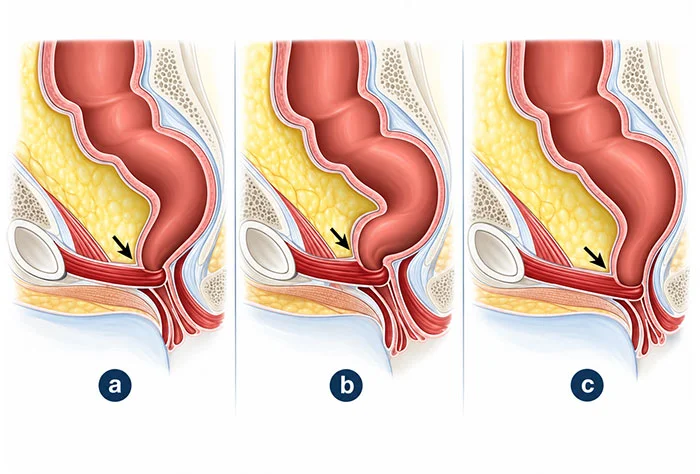
Anorectal and defecatory disorders are conditions that affect the rectum, anus, pelvic floor, or the normal process of passing stool. They may cause difficulty with bowel movements, a feeling of incomplete evacuation, straining, urgency, or problems with bowel control.
These disorders can result from constipation, pelvic floor dysfunction, weakness of the anal muscles, nerve problems, previous surgery, structural abnormalities, or other gastrointestinal conditions. A detailed anorectal evaluation can help identify the underlying cause and guide appropriate treatment.
Common Symptoms
- Difficulty Passing Stool: Straining or difficulty initiating bowel movements.
- Incomplete Evacuation: A persistent feeling that the bowel has not been completely emptied.
- Constipation: Infrequent or difficult bowel movements that may require excessive straining.
- Urgency: A sudden and difficult-to-control need to pass stool.
- Fecal Leakage: Accidental leakage of stool or mucus.
- Rectal Discomfort: Pain, pressure, or discomfort around the anus or rectum.
Common Causes
Anorectal and defecatory disorders may be associated with chronic constipation, pelvic floor dysfunction, weakened anal muscles, nerve disorders, rectal prolapse, structural abnormalities, previous anorectal surgery, childbirth-related injury, or other bowel disorders.
Anorectal Evaluation
A detailed evaluation begins with a thorough medical history and physical examination. Depending on the symptoms, specialized investigations such as anorectal manometry, balloon expulsion testing, defecography, endoscopy, endoanal ultrasound, or other anorectal tests may be recommended.
Treatment
Treatment depends on the underlying condition and severity of symptoms. Management may include dietary and lifestyle modifications, medicines, bowel training, pelvic floor exercises, biofeedback therapy, or specialized procedures. Treating the underlying cause can help improve bowel function and quality of life.
When to Consult a Specialist?
Persistent constipation, excessive straining, difficulty emptying the bowel, recurrent fecal leakage, unexplained rectal discomfort, or ongoing changes in bowel habits should be evaluated by a gastroenterologist or colorectal specialist. Anorectal evaluation may help identify the cause when routine treatment does not provide adequate relief.
- Home
- Know Your Consultant
- Our Specialisations
- Diseases We Treat
- Endoscopy and Other Procedures We Do
- Upper GI tract endoscopy
- Colonoscopy
- Sigmoidoscopy
- Management of gastrointestinal bleeds
- Stricture dilatation
- Fistula closure
- Esophageal stenting for malignancies
- Achalasia cardia dilatation
- Colonic decompression
- PEG
- Colonic stricture dilatation and colonic stent placement
- Endo-sonography (EUS)
- Therapeutic EUS
- Third space endoscopy
- Motility
- Blog