Esophageal Varices
Esophageal Varices
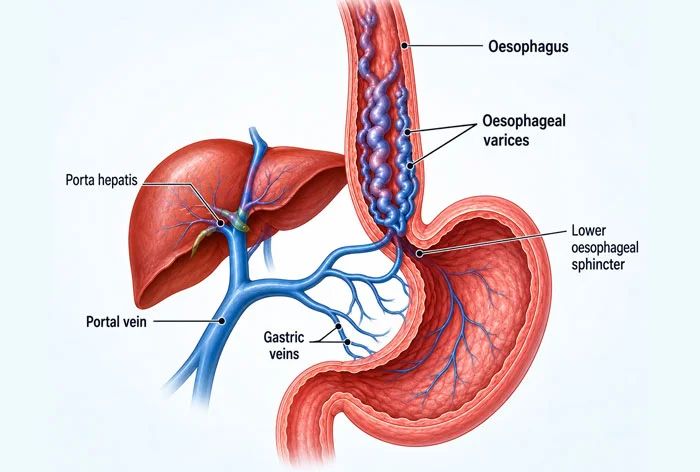
Esophageal varices are enlarged and swollen veins in the lining of the esophagus. They usually develop when blood flow through the liver is blocked or slowed, most commonly due to liver cirrhosis and portal hypertension. Increased pressure in the portal vein causes blood to flow through smaller veins around the esophagus, making them enlarged and fragile.
Esophageal varices may not cause symptoms unless they bleed. Variceal bleeding can be severe and may require immediate medical treatment.
Symptoms of Esophageal Varices
Esophageal varices often do not cause symptoms until bleeding occurs. Possible symptoms may include:
- Vomiting Blood: Vomiting bright red blood or material that looks like coffee grounds may indicate bleeding.
- Black, Tarry Stools: Bleeding in the upper digestive tract can result in dark or tar-like stools.
- Dizziness or Fainting: Significant blood loss may cause weakness, dizziness, or loss of consciousness.
- Low Blood Pressure: Severe bleeding can cause a sudden drop in blood pressure.
- Rapid Heartbeat: The heart may beat faster in response to significant blood loss.
- Pale Skin: Blood loss may cause noticeable paleness.
- Weakness and Fatigue: Significant or repeated blood loss can result in tiredness and weakness.
Causes of Esophageal Varices
Esophageal varices mainly develop because of increased pressure in the portal venous system. Common causes and associated conditions include:
- Liver Cirrhosis: Scarring of the liver can obstruct normal blood flow and increase portal vein pressure.
- Portal Hypertension: Increased pressure within the portal vein can cause blood to flow through veins around the esophagus.
- Portal Vein Thrombosis: A blood clot in the portal vein can interfere with normal blood flow.
- Hepatic Vein Disorders: Conditions affecting the veins that drain blood from the liver may contribute to portal hypertension.
- Chronic Liver Disease: Long-term liver conditions can increase the risk of developing varices.
Risk Factors for Esophageal Varices
Certain conditions can increase the likelihood of developing esophageal varices and variceal bleeding.
- Advanced Liver Disease: Severe liver damage increases the risk of portal hypertension.
- Alcohol-Related Liver Disease: Long-term excessive alcohol consumption can cause liver damage and cirrhosis.
- Viral Hepatitis: Chronic hepatitis B or C infection can lead to liver scarring.
- Previous Variceal Bleeding: Patients who have previously experienced variceal bleeding have a higher risk of recurrence.
- Severe Portal Hypertension: Higher pressure in the portal venous system increases the risk of variceal enlargement and bleeding.
Diagnosis of Esophageal Varices
Esophageal varices are usually diagnosed through evaluation of the esophagus and the underlying liver condition. Tests may include:
- Upper GI Endoscopy: Endoscopy allows direct examination of the esophagus and helps identify enlarged veins and signs of previous or active bleeding.
- Blood Tests: Blood tests may be performed to evaluate liver function, blood counts, and clotting ability.
- Ultrasound: Abdominal ultrasound, including Doppler studies, may help assess the liver and blood flow through the portal vein.
- CT or MRI: Imaging studies may be used to evaluate the liver, portal circulation, and other abdominal structures.
- Liver Evaluation: Additional tests may be recommended to determine the severity and cause of underlying liver disease.
Treatment for Esophageal Varices
Treatment depends on whether the varices have bled, the severity of bleeding, and the underlying liver condition. The main goals are to control active bleeding and reduce the risk of future bleeding.
- Endoscopic Variceal Ligation: Small elastic bands are placed around bleeding or high-risk varices to stop bleeding and reduce the risk of recurrence.
- Medications: Medicines such as non-selective beta-blockers may be prescribed in selected patients to reduce portal pressure and bleeding risk.
- Endoscopic Injection Therapy: In selected situations, medicines may be injected into the varices to control bleeding.
- Blood Transfusion: Severe bleeding may require replacement of lost blood and correction of clotting abnormalities.
- TIPS Procedure: A transjugular intrahepatic portosystemic shunt may be considered for severe or uncontrolled variceal bleeding.
- Treatment of Liver Disease: Managing the underlying liver condition is an important part of reducing future complications.
Possible Complications
Esophageal varices can become life-threatening if they rupture and cause significant bleeding. Possible complications include:
- Variceal Bleeding: Enlarged veins may rupture and cause severe bleeding.
- Severe Blood Loss: Significant bleeding can lead to anemia and circulatory problems.
- Shock: Massive blood loss can result in dangerously low blood pressure and shock.
- Aspiration: Vomited blood may enter the airway and cause breathing complications.
- Recurrent Bleeding: Patients who have experienced variceal bleeding may have a risk of future bleeding.
- Liver-Related Complications: Esophageal varices are commonly associated with advanced liver disease and portal hypertension.
Prevention of Variceal Bleeding
For people at risk of esophageal varices, appropriate medical management can help reduce the risk of bleeding.
- Regular Medical Follow-Up: Patients with chronic liver disease should undergo appropriate monitoring.
- Endoscopic Screening: Regular endoscopic evaluation may be recommended for patients at risk.
- Medications: Prescribed medicines may help reduce portal pressure and the risk of bleeding.
- Liver Disease Management: Treating the underlying liver condition can help reduce further liver damage.
- Avoid Alcohol: Avoiding alcohol is important for people with alcohol-related or other chronic liver diseases.
When to Consult a Specialist?
Patients with chronic liver disease, portal hypertension, or suspected esophageal varices should be evaluated by a gastroenterologist or hepatologist. Regular monitoring can help identify high-risk varices and reduce the possibility of serious complications.
Vomiting blood, passing black stools, severe dizziness, fainting, or symptoms of significant blood loss require immediate emergency medical attention.
Early diagnosis, appropriate monitoring, and timely treatment of esophageal varices can help reduce the risk of life-threatening bleeding and other complications.