Esophageal Fistulae
Esophageal Fistulae
Esophageal fistulae are abnormal connections between the esophagus and another nearby organ or structure. These abnormal passages can allow food, saliva, or digestive contents to pass into areas where they should not normally enter.
Esophageal fistulae may develop due to congenital abnormalities, cancer, infections, inflammation, trauma, previous surgery, or complications of medical procedures. Depending on their location and cause, they can lead to serious swallowing and breathing problems.
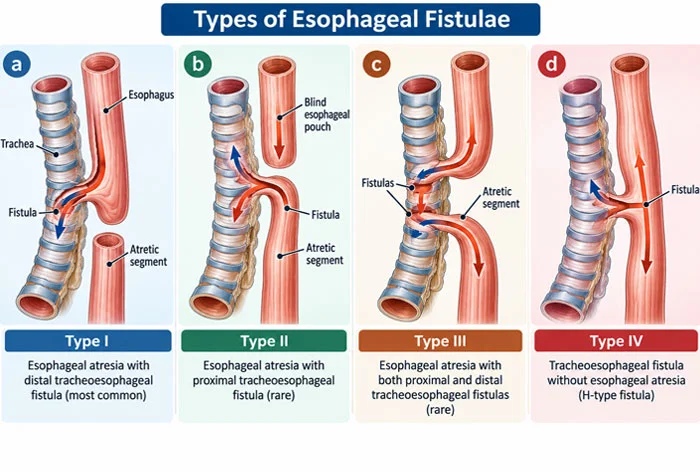
Types of Esophageal Fistulae
Esophageal fistulae can be classified according to the organs or structures connected to the esophagus.
- Tracheoesophageal Fistula: An abnormal connection between the esophagus and the trachea or airway.
- Bronchoesophageal Fistula: A connection between the esophagus and one of the bronchi of the lungs.
- Esophagopleural Fistula: An abnormal communication between the esophagus and the pleural cavity surrounding the lung.
- Esophagocutaneous Fistula: A rare connection between the esophagus and the skin.
- Esophagogastric Fistula: An abnormal communication involving the esophagus and stomach, which may occur in specific disease or surgical settings.
Symptoms of Esophageal Fistula
Symptoms depend on the location and size of the fistula and the underlying cause. Common symptoms may include:
- Coughing While Eating: Food or liquids entering the airway through a fistula can trigger coughing during swallowing.
- Difficulty Swallowing: Swallowing may become difficult or uncomfortable.
- Choking: Repeated choking episodes may occur when food or liquids enter the respiratory tract.
- Recurrent Chest Infections: Aspiration of food or secretions can increase the risk of pneumonia and other respiratory infections.
- Shortness of Breath: Aspiration or infection may cause breathing difficulties.
- Fever: Infection resulting from aspiration or leakage may cause fever.
- Chest Pain: Inflammation, infection, or leakage around the esophagus may cause chest discomfort.
- Regurgitation: Food or liquid may move abnormally through the fistulous connection.
- Weight Loss: Persistent swallowing difficulties and illness may lead to reduced nutritional intake.
Causes of Esophageal Fistulae
Esophageal fistulae can develop due to several conditions affecting the esophagus and surrounding organs.
- Congenital Abnormalities: Some tracheoesophageal fistulae develop before birth and are usually identified during infancy.
- Esophageal Cancer: Advanced tumors may erode through the esophageal wall and form an abnormal connection with the airway or other nearby structures.
- Infections: Severe infections involving the esophagus or surrounding tissues can cause fistula formation.
- Previous Surgery: Fistulae may occasionally develop as a complication of surgery involving the esophagus, stomach, or chest.
- Endoscopic Procedures: Rarely, injury during certain endoscopic or other medical procedures can result in fistula formation.
- Trauma: Severe injury to the chest or esophagus can damage surrounding structures and create an abnormal communication.
- Inflammatory Conditions: Severe inflammation or tissue destruction may contribute to fistula development.
- Foreign Body Injury: A retained or impacted foreign body can occasionally cause significant tissue damage and fistula formation.
Diagnosis of Esophageal Fistulae
Early diagnosis is important because an esophageal fistula can lead to aspiration, infection, and nutritional complications. Several investigations may be used to identify the fistula and determine its location.
- Contrast Esophagogram: A contrast X-ray study can demonstrate abnormal leakage or communication between the esophagus and another structure.
- Upper GI Endoscopy: Endoscopy allows direct examination of the esophageal lining and may identify the opening of the fistula.
- CT Scan: CT imaging can help identify the fistulous tract, surrounding inflammation, collections, or associated lung abnormalities.
- Bronchoscopy: Bronchoscopy may be performed when a connection between the esophagus and airway is suspected.
- Chest Imaging: Chest X-ray or other imaging may help identify pneumonia, air or fluid collections, or other complications.
Assessment of the Underlying Cause
Identifying why the fistula developed is an important part of treatment. The medical team may evaluate for cancer, infection, previous surgery, trauma, inflammatory disease, or congenital abnormalities.
When malignancy is suspected, endoscopic biopsy and appropriate imaging may be required to establish the diagnosis and determine the extent of disease.
Treatment Options
Treatment depends on the cause, location, size, and severity of the fistula, as well as the patient's overall condition. Management generally aims to prevent leakage, control infection, maintain nutrition, and close the abnormal connection.
- Nutritional Support: Patients may require enteral or intravenous nutritional support when swallowing is unsafe or inadequate.
- Antibiotic Treatment: Antibiotics may be required when aspiration pneumonia, mediastinal infection, or other infections are present.
- Endoscopic Closure: Selected fistulae may be treated using endoscopic clips, covered stents, suturing, or other closure techniques.
- Esophageal Stenting: A covered stent may be placed in selected cases to divert contents away from the fistula and allow healing.
- Airway Management: In tracheoesophageal or bronchoesophageal fistulae, airway evaluation and treatment may be required.
- Surgical Repair: Surgery may be required for selected large, complex, persistent, or congenital fistulae.
- Treatment of Underlying Disease: Cancer, infection, inflammatory disease, or other underlying causes must be treated appropriately.
Endoscopic Treatment
Endoscopic techniques can provide minimally invasive treatment for selected esophageal fistulae. Depending on the fistula characteristics, specialists may use covered esophageal stents, endoscopic clips, suturing devices, or tissue-sealing techniques to close or isolate the abnormal opening.
The choice of technique depends on the location, size, cause, and surrounding tissue condition of the fistula.
Possible Complications
Untreated esophageal fistulae can result in serious complications because digestive contents and secretions may enter the respiratory tract or surrounding tissues.
- Aspiration Pneumonia: Food, saliva, or digestive contents entering the lungs can cause severe infection.
- Sepsis: Severe infection resulting from leakage or aspiration can spread throughout the body.
- Mediastinitis: Leakage from the esophagus into the chest can cause serious inflammation and infection in the mediastinum.
- Respiratory Failure: Extensive aspiration or infection may severely affect lung function.
- Malnutrition: Inadequate oral intake and chronic illness can result in nutritional deficiencies.
- Dehydration: Difficulty swallowing may result in inadequate fluid intake.
- Persistent Fistula: Some fistulae may fail to close and require repeated endoscopic or surgical treatment.
Recovery and Follow-Up
Follow-up is important after treatment to confirm that the fistula has closed and to monitor for complications or recurrence.
Depending on the type of fistula and treatment performed, follow-up may include repeat imaging, contrast studies, endoscopy, nutritional assessment, and evaluation of swallowing and respiratory symptoms.
When to Consult a Specialist?
Persistent coughing while eating, recurrent pneumonia, difficulty swallowing, unexplained weight loss, fever, chest pain, or suspected leakage from the esophagus should be evaluated promptly by a gastroenterologist or an esophageal specialist.
Esophageal fistulae can cause serious respiratory and infectious complications. Early diagnosis, nutritional support, treatment of the underlying cause, and appropriate endoscopic or surgical management can help improve outcomes.