Third Space Endoscopy
Third Space Endoscopy
Third space endoscopy is an advanced endoscopic technique that allows specialists to access and treat conditions within the layers of the gastrointestinal wall without conventional open surgery.
The technique involves creating a controlled passage beneath the mucosal surface, known as the submucosal or "third space". Specialized endoscopic instruments can then be introduced through this space to perform selected diagnostic and therapeutic procedures.
Third space endoscopy has expanded the role of minimally invasive treatment for conditions involving the esophagus, stomach and other parts of the gastrointestinal tract.
Third Space Endoscopy Procedures
What is Third Space Endoscopy?
Third space endoscopy uses the natural layers of the gastrointestinal wall to create an endoscopic working space. The endoscopist makes a small entry into the mucosal layer and carefully develops a tunnel within the submucosal layer.
This approach provides access to deeper layers of the gastrointestinal wall while maintaining the integrity of the mucosal surface as much as possible. At the end of the procedure, the entry point is closed using endoscopic clips or other closure techniques.
- Minimally Invasive: Procedures are performed through an endoscope without conventional external surgical incisions.
- Submucosal Access: A controlled working space is created beneath the mucosal layer.
- Advanced Endoscopic Therapy: Specialized instruments can be introduced into the created space.
- Targeted Treatment: The technique allows selected abnormalities to be treated directly.
Per-oral Endoscopic Myotomy
Per-oral endoscopic myotomy (POEM) is an advanced endoscopic procedure primarily used to treat disorders in which the muscles of the esophagus do not relax normally, such as achalasia.
During POEM, the endoscopist creates a small mucosal entry point and develops a submucosal tunnel. The underlying muscle fibers responsible for the abnormal obstruction are then divided to improve the passage of food from the esophagus into the stomach.
- Achalasia: POEM is an established endoscopic treatment option for appropriately selected patients with achalasia.
- Muscle Division: The abnormal muscle fibers are selectively divided through the submucosal tunnel.
- Improved Passage: Myotomy aims to reduce resistance at the lower esophageal sphincter and improve swallowing.
- Endoscopic Approach: The procedure is performed through the mouth using a flexible endoscope.
- Follow-Up: Patients require appropriate clinical follow-up after the procedure to assess symptoms and treatment response.
Endoscopic Submucosal Dissection
Endoscopic submucosal dissection (ESD) is an advanced technique used to remove selected superficial gastrointestinal lesions in a controlled and en-bloc manner.
The endoscopist creates a controlled submucosal working space beneath the lesion and carefully dissects the abnormal tissue from the deeper layers of the gastrointestinal wall.
- Superficial Lesions: ESD may be used for selected early or superficial gastrointestinal neoplasms.
- En-bloc Removal: The technique can allow removal of an appropriately selected lesion in one piece.
- Precise Dissection: Specialized endoscopic knives are used to carefully separate the lesion from surrounding tissue.
- Histopathology: The removed specimen can be examined in detail to determine the depth and characteristics of the lesion.
- Organ Preservation: In selected cases, endoscopic removal may provide an alternative to more extensive surgical treatment.
Endoscopic Full Thickness Resection
Endoscopic full thickness resection (EFTR) is an advanced endoscopic technique that allows selected lesions involving deeper layers of the gastrointestinal wall to be removed through an endoscopic approach.
Unlike conventional superficial resection techniques, EFTR can involve removal of the full thickness of the gastrointestinal wall at the targeted site, followed by endoscopic closure of the defect.
- Deep Gastrointestinal Lesions: EFTR may be considered for selected lesions involving deeper layers of the gastrointestinal wall.
- Submucosal Tumours: Selected lesions that extend into deeper wall layers may be evaluated for this approach.
- Full Thickness Removal: The technique allows the targeted abnormal tissue to be removed together with the involved wall layers.
- Endoscopic Closure: The resulting defect is closed using specialized endoscopic closure techniques.
- Specimen Analysis: The resected tissue can be sent for detailed pathological examination.
Who May Be Considered for Third Space Endoscopy?
Third space endoscopy is not appropriate for every patient. The choice of procedure depends on the type, size, location and depth of the abnormality, as well as the patient's overall clinical condition.
- Selected patients with achalasia or related esophageal motility disorders
- Patients with appropriately selected superficial gastrointestinal lesions
- Selected patients with deeper gastrointestinal wall lesions
- Patients requiring advanced endoscopic treatment when an endoscopic approach is appropriate
How is Third Space Endoscopy Performed?
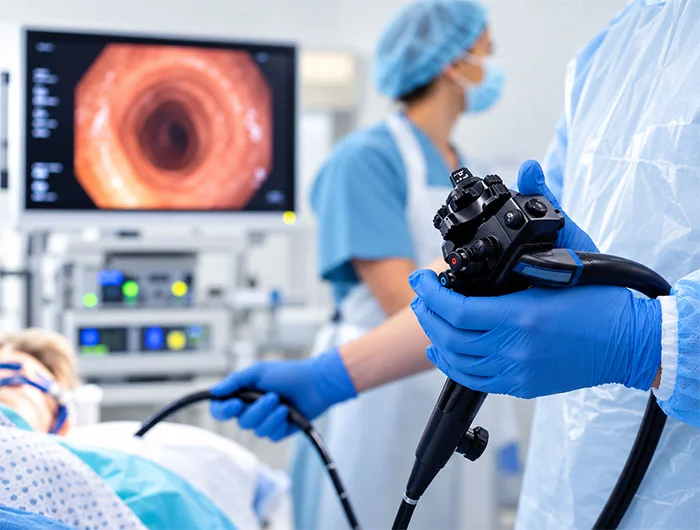
The procedure is performed using a specialized flexible endoscope. Depending on the treatment, the endoscopist creates a small mucosal entry point and develops a submucosal tunnel to reach the target area.
Specialized endoscopic knives, graspers and other instruments can then be used to perform the required treatment. Once the intervention is completed, the mucosal entry or gastrointestinal wall defect is closed using appropriate endoscopic closure techniques.
Preparation Before the Procedure
Preparation depends on the type of third space endoscopy being performed. Patients generally receive specific instructions regarding fasting, medications and anesthesia.
- Fasting: Follow the fasting instructions provided by the medical team.
- Medication Review: Inform the doctor about all medications being taken.
- Blood Thinners: Discuss anticoagulant and antiplatelet medicines with the treating team.
- Medical History: Inform the doctor about allergies and existing medical conditions.
- Previous Investigations: Endoscopy, imaging, biopsy and other relevant reports may be reviewed before the procedure.
After Third Space Endoscopy
Patients are monitored following the procedure, particularly when general anesthesia or deep sedation has been used.
Depending on the procedure performed, patients may initially require dietary restrictions before gradually returning to their usual diet according to medical advice.
Follow-up may include clinical assessment, repeat endoscopy, imaging or review of the pathology report, depending on the treatment performed.
Benefits of Third Space Endoscopy
- Minimally invasive endoscopic approach
- No conventional external surgical incision
- Provides access to selected deeper layers of the gastrointestinal wall
- Allows targeted treatment of selected conditions
- Can provide en-bloc removal of selected superficial lesions
- Allows treatment of selected deep gastrointestinal lesions
- May provide an alternative to surgery in appropriately selected patients
Possible Risks
Third space endoscopy involves advanced endoscopic techniques and, like other invasive procedures, may have potential complications. The risks depend on the specific procedure performed.
- Bleeding
- Infection
- Perforation or leakage
- Abdominal or chest discomfort
- Post-procedure inflammation
- Reaction to anesthesia or sedation
- Procedure-specific complications
Follow-Up After Third Space Endoscopy
Follow-up depends on the procedure performed and the underlying condition. Patients undergoing lesion removal may require pathology review to determine the exact nature and completeness of resection.
Patients treated for motility disorders may require clinical assessment to evaluate symptom improvement. Additional investigations may be recommended when clinically appropriate.
Conclusion
Third space endoscopy is an advanced minimally invasive approach that allows endoscopists to work within the submucosal layers of the gastrointestinal tract.
Procedures such as per-oral endoscopic myotomy, endoscopic submucosal dissection and endoscopic full thickness resection can provide targeted treatment for appropriately selected gastrointestinal conditions.
Because these procedures require specialized equipment and expertise, treatment should be planned after detailed evaluation of the patient's condition, anatomy and available treatment options.