Dysphagia
Dysphagia
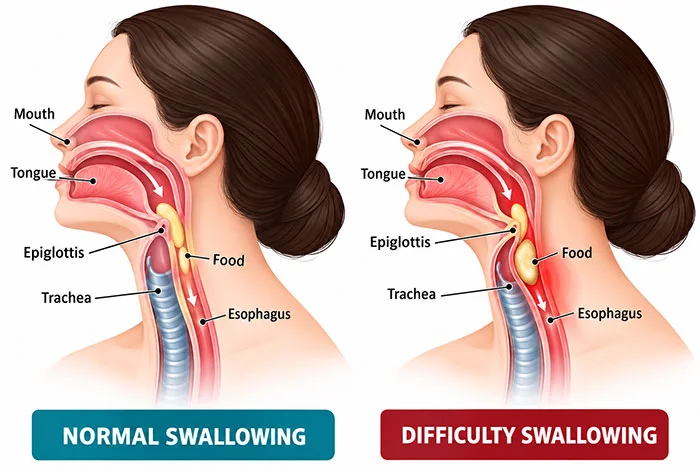
Dysphagia refers to difficulty or discomfort while swallowing food, liquids, or saliva. It can occur at different stages of the swallowing process and may be caused by problems involving the mouth, throat, esophagus, or the nerves and muscles responsible for swallowing. Swallowing is a complex process that requires coordinated movement of the muscles and nerves of the mouth, throat, and esophagus to move food and liquids safely into the stomach.
Symptoms of Dysphagia
Common symptoms associated with dysphagia may include:
- Difficulty Swallowing: Feeling that food or liquid is difficult to move from the mouth to the stomach.
- Food Sticking: A sensation that food is stuck in the throat or chest.
- Painful Swallowing: Pain or discomfort while swallowing food or liquids.
- Coughing While Eating: Coughing or choking during or shortly after swallowing.
- Regurgitation: Food or liquid may come back into the mouth or throat after swallowing.
- Excessive Drooling: Difficulty swallowing saliva may result in increased drooling.
- Voice Changes: A wet or gurgly voice after eating or drinking may occur.
- Weight Loss: Persistent swallowing difficulties may lead to reduced food intake and unintentional weight loss.
Causes of Dysphagia
Dysphagia can result from structural abnormalities, disorders affecting the movement of the esophagus, or conditions affecting the nerves and muscles involved in swallowing.
- Esophageal Stricture: Narrowing of the esophagus can make it difficult for food to pass normally.
- Achalasia Cardia: A disorder in which the lower esophageal sphincter does not relax properly during swallowing.
- Gastroesophageal Reflux Disease: Long-standing acid reflux may cause inflammation or narrowing of the esophagus.
- Esophageal Tumors: Growths within the esophagus can interfere with the normal passage of food.
- Neurological Disorders: Conditions affecting the nervous system may interfere with the muscles involved in swallowing.
- Muscle Disorders: Certain conditions affecting the muscles can impair normal swallowing.
- Stroke: A stroke can affect the coordination and strength of the muscles required for swallowing.
- Foreign Body: Food or other objects may become lodged in the esophagus and cause swallowing difficulty.
Diagnosis of Dysphagia
Evaluation of dysphagia begins with a detailed medical history and examination. Depending on the suspected cause, different tests may be recommended.
- Upper GI Endoscopy: Allows direct examination of the esophagus and stomach to identify inflammation, narrowing, tumors, or other abnormalities.
- Barium Swallow: An imaging test that evaluates the movement of food and liquid through the mouth, throat, and esophagus.
- Esophageal Manometry: Measures the pressure and muscle contractions of the esophagus during swallowing.
- Modified Barium Swallow: Helps assess the swallowing process and identify problems with the coordination of swallowing.
- Imaging Tests: CT scans or other imaging studies may be recommended when structural abnormalities need further evaluation.
Treatment for Dysphagia
Treatment depends on the underlying cause, severity of symptoms, and location of the swallowing problem. Management may involve medications, dietary changes, endoscopic procedures, or surgery.
- Dietary Modification: Changing the texture and consistency of food and liquids may make swallowing easier.
- Medications: Medicines may be prescribed when dysphagia is related to acid reflux, inflammation, or certain underlying conditions.
- Endoscopic Treatment: Procedures such as esophageal dilation may be used to treat certain strictures or narrowed areas.
- Achalasia Treatment: Selected patients may require treatments such as pneumatic dilation, POEM, or surgical myotomy.
- Swallowing Therapy: Speech and swallowing therapy may help improve swallowing coordination and muscle function in selected cases.
- Surgical Treatment: Surgery may be considered for certain structural abnormalities, tumors, or conditions that do not respond to other treatments.
Possible Complications
Untreated or persistent dysphagia can affect nutrition, hydration, and overall health. Possible complications may include:
- Malnutrition: Difficulty eating may result in inadequate nutritional intake.
- Dehydration: Difficulty swallowing liquids can lead to insufficient fluid intake.
- Weight Loss: Reduced food intake may cause unintended weight loss.
- Aspiration: Food or liquid may enter the airway instead of the esophagus.
- Aspiration Pneumonia: Repeated aspiration can increase the risk of lung infections.
- Food Impaction: Food may become lodged in a narrowed portion of the esophagus.
When to Consult a Specialist?
Persistent or worsening difficulty swallowing should be evaluated by a gastroenterologist or esophageal specialist. Early assessment can help identify the underlying cause and allow appropriate treatment before complications develop.
Timely diagnosis and appropriate treatment of dysphagia can help improve swallowing, maintain adequate nutrition and hydration, and reduce the risk of complications.