Corrosive Ingestion
Corrosive Ingestion
Corrosive ingestion occurs when a person accidentally or intentionally swallows a corrosive substance such as a strong acid or alkali. These substances can cause chemical burns to the mouth, throat, esophagus, stomach, and other parts of the digestive tract.
The severity of injury depends on the type and concentration of the substance, the amount swallowed, and the duration of contact with the digestive tract. Severe injuries may lead to complications such as esophageal strictures, perforation, bleeding, or difficulty swallowing.
Signs and Symptoms
Symptoms following corrosive ingestion can vary depending on the severity and location of the injury. Common symptoms may include:
- Burning Pain: Burning or severe pain in the mouth, throat, chest, or upper abdomen.
- Difficulty Swallowing: Pain or difficulty while swallowing food, liquids, or saliva.
- Drooling: Excessive drooling may occur when swallowing saliva becomes painful or difficult.
- Vomiting: Repeated vomiting may occur after ingestion of a corrosive substance.
- Blood in Vomit: Severe injury may cause bleeding from the upper digestive tract.
- Difficulty Breathing: Swelling of the throat or airway injury may cause breathing difficulties.
- Chest or Abdominal Pain: Significant injury to the esophagus or stomach may cause severe pain.
- Voice Changes: Hoarseness or changes in voice may occur when the throat or airway is affected.
Common Causes
Corrosive ingestion may occur accidentally or intentionally. Commonly involved substances include:
- Strong Acids: Certain industrial, household, or cleaning products may contain corrosive acids.
- Strong Alkalis: Some drain cleaners and other cleaning products contain powerful alkaline substances.
- Household Cleaning Products: Accidental ingestion of cleaning chemicals can cause serious digestive tract injuries.
- Industrial Chemicals: Exposure to concentrated industrial chemicals may result in severe chemical burns.
- Accidental Ingestion: Children may accidentally swallow corrosive substances stored improperly.
Assessment of Corrosive Injury
Patients who have swallowed a potentially corrosive substance require prompt medical assessment. The doctor will determine the substance involved, estimated quantity, time since ingestion, and the patient's symptoms.
- Clinical Examination: The mouth, throat, breathing, and overall condition of the patient are assessed.
- Upper GI Endoscopy: Endoscopy may be performed in appropriate patients to assess the extent of injury to the esophagus and stomach.
- Imaging Tests: X-rays or CT scans may be recommended when perforation or deeper tissue injury is suspected.
- Blood Tests: Blood tests may be performed to assess the patient's general condition and identify complications.
- Airway Assessment: Patients with breathing difficulty or significant throat swelling may require urgent airway evaluation.
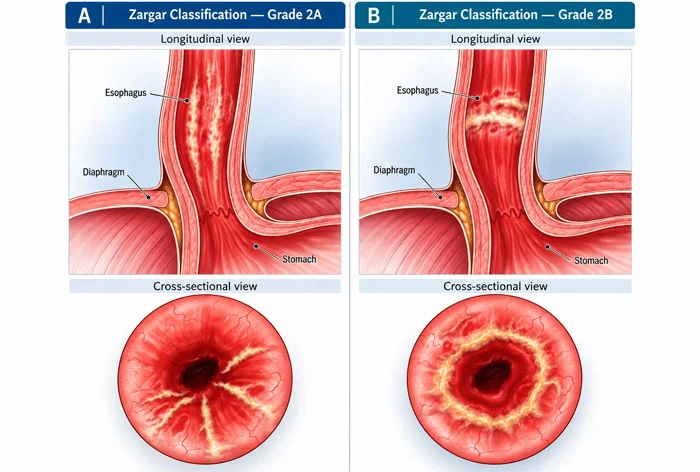
Grades of Esophageal Injury
Endoscopic assessment can help determine the severity of injury and guide further management.
- Mild Injury: Superficial inflammation or minor mucosal injury may be present.
- Moderate Injury: Deeper ulceration and tissue damage may occur.
- Severe Injury: Extensive ulceration, necrosis, or deep tissue destruction may occur in serious cases.
- Complicated Injury: Severe cases may be associated with perforation, infection, bleeding, or other life-threatening complications.
Management and Treatment
Treatment depends on the type of corrosive substance, severity of injury, symptoms, and findings on evaluation. Management is generally focused on preventing further injury, supporting vital functions, and treating complications.
- Immediate Medical Assessment: Patients should be evaluated promptly after suspected corrosive ingestion.
- Airway Support: Patients with significant airway swelling or breathing difficulty may require urgent airway management.
- Fluid and Nutritional Support: Intravenous fluids and appropriate nutritional support may be required in patients who cannot swallow safely.
- Endoscopic Evaluation: Selected patients may undergo upper GI endoscopy to determine the extent of digestive tract injury.
- Management of Complications: Bleeding, perforation, infection, or other complications may require specialized treatment or surgery.
- Follow-Up: Patients with significant esophageal injury may require follow-up evaluation for delayed complications such as strictures.
What Should Be Avoided?
After suspected corrosive ingestion, inappropriate first-aid measures can potentially worsen the injury.
- Do Not Induce Vomiting: Bringing the corrosive substance back through the esophagus may cause additional injury.
- Do Not Attempt Chemical Neutralization: Trying to neutralize an acid with an alkali or an alkali with an acid can cause additional chemical reactions and injury.
- Do Not Delay Medical Care: Significant or suspected corrosive ingestion requires prompt professional assessment.
- Avoid Unsupervised Oral Intake: Food, liquids, or home remedies should not be given without appropriate medical advice, particularly when swallowing is difficult.
Possible Complications
Severe corrosive injury can result in both immediate and delayed complications.
- Esophageal Perforation: Severe tissue damage may create a hole in the esophageal wall.
- Gastrointestinal Bleeding: Deep chemical injury may result in bleeding.
- Infection: Tissue damage or perforation can lead to serious infections.
- Esophageal Stricture: Healing after significant injury can result in narrowing of the esophagus and difficulty swallowing.
- Difficulty Swallowing: Scarring may cause persistent or progressive swallowing problems.
- Malnutrition: Severe swallowing difficulties may interfere with adequate food and fluid intake.
- Airway Complications: Swelling or injury involving the throat may affect breathing.
Long-Term Follow-Up
Patients who sustain significant corrosive injuries may require long-term follow-up. Esophageal scarring can develop weeks or months after the initial injury and may cause progressive difficulty swallowing.
Depending on the severity of the stricture, treatment may include endoscopic dilation, nutritional support, and other specialized procedures.
When to Seek Emergency Medical Care?
Any suspected ingestion of a strong corrosive substance should be taken seriously. Immediate medical evaluation is particularly important when there is difficulty breathing, severe pain, persistent vomiting, blood in vomit, excessive drooling, difficulty swallowing, or altered consciousness.
Corrosive ingestion can cause serious and potentially life-threatening injuries to the digestive tract. Prompt medical assessment and appropriate management can help identify the extent of injury and reduce the risk of serious complications.