Management of Gastrointestinal Bleeds
Management of Gastrointestinal Bleeds
Gastrointestinal bleeding refers to bleeding occurring anywhere within the digestive tract. Depending on its location and severity, it may present as vomiting blood, black or tarry stools, fresh blood in the stool, dizziness, weakness, or anemia.
Endoscopy plays an important role in the diagnosis and treatment of gastrointestinal bleeding. It allows the gastroenterologist to identify the bleeding source and, when appropriate, perform endoscopic hemostasis during the same procedure.
Different techniques may be selected depending on the cause, location, severity of bleeding, and the patient's overall condition. These include variceal band ligation, injection sclerotherapy, Danis stent placement, hemoclip placement, and Argon Plasma Coagulation (APC).
Understanding Gastrointestinal Bleeding
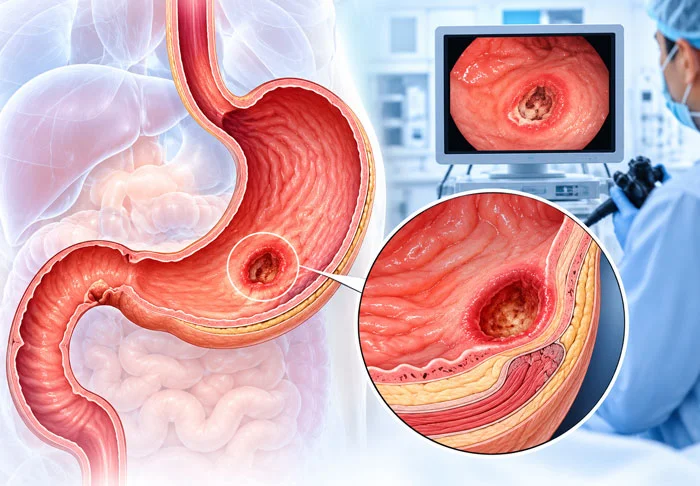
Gastrointestinal bleeding can arise from different parts of the digestive tract and may have several causes. Bleeding can be acute and severe or slow and persistent, eventually leading to iron-deficiency anemia.
Common causes include esophageal and gastric varices, peptic ulcers, erosions, vascular lesions, angioectasias, diverticular disease, polyps, tumors, inflammatory conditions, and post-procedure bleeding.
Because significant gastrointestinal bleeding can lead to hemodynamic instability, initial assessment and resuscitation are important before definitive endoscopic treatment. ESGE recommends assessment of hemodynamic status and appropriate resuscitation in patients presenting with acute upper GI hemorrhage. :contentReference[oaicite:1]{index=1}
Common Symptoms of Gastrointestinal Bleeding
- Vomiting blood: Blood may appear bright red or resemble coffee grounds.
- Black stools: Tarry, black stools may indicate bleeding from the upper gastrointestinal tract.
- Fresh blood in stool: May occur with lower gastrointestinal bleeding or brisk upper GI bleeding.
- Weakness and fatigue: May occur because of blood loss or anemia.
- Dizziness or fainting: Can occur with significant blood loss.
- Pale skin: May be associated with anemia or acute blood loss.
- Shortness of breath: Can occur with significant anemia.
Endoscopic Management of Gastrointestinal Bleeding
Endoscopic hemostasis involves using specialized techniques to stop active bleeding or reduce the risk of recurrent bleeding. The appropriate technique depends on the underlying lesion and its location.
Mechanical methods, injection therapy, and thermal techniques may be used individually or in combination for selected non-variceal bleeding lesions. :contentReference[oaicite:2]{index=2}
Variceal Band Ligation
Endoscopic variceal band ligation (EVL) is an important treatment for acute esophageal variceal hemorrhage. Varices are enlarged veins in the esophagus that can develop as a consequence of portal hypertension, commonly associated with advanced chronic liver disease and cirrhosis.
During the procedure, the endoscope is positioned near the varix and a small elastic band is deployed around the bleeding or high-risk varix. The band interrupts blood flow to the varix, resulting in thrombosis and eventual obliteration.
ESGE recommends endoscopic band ligation for the treatment of acute esophageal variceal hemorrhage. Repeat sessions may be required to achieve variceal eradication. :contentReference[oaicite:3]{index=3}
Benefits of Variceal Banding
- Direct treatment of esophageal varices
- Can control active variceal bleeding
- Helps reduce the risk of recurrent variceal hemorrhage
- Performed endoscopically without open surgery
- Can be repeated when required for variceal eradication
Sclerotherapy
Endoscopic injection sclerotherapy involves injecting a sclerosing agent into or around a bleeding varix or selected bleeding lesion. The injected material promotes local thrombosis and tissue reaction, helping control bleeding.
Sclerotherapy has historically been used in the treatment of esophageal varices and may have a role in selected clinical situations, particularly when band ligation is not technically feasible or as part of specialized endoscopic management.
The choice of injection therapy depends on the type and location of bleeding, available expertise, and the patient's clinical condition.
Danis Stent Placement
A Danis stent is a specialized self-expanding esophageal stent designed to provide temporary control of uncontrolled or refractory esophageal variceal bleeding.
The stent applies pressure to the bleeding varices from within the esophagus and can act as a bridge to definitive treatment when conventional pharmacological and endoscopic measures do not adequately control bleeding.
In patients with persistent esophageal variceal bleeding despite medical and endoscopic treatment, rescue therapies such as urgent TIPS may be required. Esophageal stenting can be considered as a temporary rescue or bridge strategy in appropriate specialist settings. :contentReference[oaicite:4]{index=4}
Role of a Danis Stent
- Temporary control of refractory esophageal variceal bleeding
- Provides pressure against bleeding varices
- Can serve as a bridge to definitive therapy
- May be considered when standard endoscopic measures fail
- Requires specialist endoscopic expertise and appropriate monitoring
Hemoclip Placement
Hemoclips are small mechanical clips deployed through an endoscope to compress a bleeding vessel or bleeding tissue. They can provide targeted mechanical hemostasis without applying thermal energy to surrounding tissue.
Hemoclips are commonly used for selected peptic ulcer bleeding, visible vessels, post-polypectomy bleeding, and other focal bleeding lesions.
For certain lower gastrointestinal bleeding sources, including diverticular bleeding, through-the-scope clips are an established endoscopic treatment option. :contentReference[oaicite:5]{index=5}
Advantages of Hemoclips
- Mechanical hemostasis: Physically compresses the bleeding site.
- Targeted treatment: Can be placed directly over a visible bleeding vessel.
- No thermal injury: Does not rely on heat to achieve hemostasis.
- Useful for focal lesions: Particularly useful when a discrete bleeding point can be identified.
- Repeat treatment: Additional clips can sometimes be placed when clinically appropriate.
Argon Plasma Coagulation (APC)
Argon Plasma Coagulation (APC) is a non-contact thermal endoscopic technique used to treat selected superficial bleeding lesions.
During APC, ionized argon gas conducts electrical energy to the tissue surface, producing controlled superficial coagulation. Because it is a non-contact technique, it can be particularly useful for treating broad or superficial bleeding areas.
APC is used in selected conditions such as angioectasias, vascular ectasias, and certain superficial bleeding lesions. Guidelines identify non-contact thermal therapy with APC as an endoscopic option for angioectasia bleeding. :contentReference[oaicite:6]{index=6}
Applications of APC
- Angioectasia: Treatment of selected vascular lesions causing gastrointestinal bleeding.
- Superficial bleeding: Can treat diffuse or superficial bleeding areas.
- Vascular ectasia: May be used for selected vascular abnormalities.
- Selected gastric lesions: Can be used in appropriate cases of superficial gastric bleeding.
Choosing the Appropriate Hemostatic Technique
The treatment method is selected according to the source and location of bleeding, type of lesion, severity of blood loss, visibility of the bleeding point, underlying liver disease, and overall clinical condition.
- Esophageal varices: Variceal band ligation is an established endoscopic treatment.
- Selected variceal bleeding: Injection therapy may be considered in appropriate circumstances.
- Refractory esophageal variceal bleeding: A Danis stent may be used as a temporary rescue or bridge treatment in specialized settings.
- Focal bleeding vessel: Hemoclips may provide targeted mechanical hemostasis.
- Superficial vascular lesions: APC can be useful for selected lesions such as angioectasias.
Management of Variceal Bleeding
Variceal bleeding requires prompt assessment and coordinated management because it may be associated with advanced liver disease and significant blood loss.
Endoscopic band ligation is recommended for acute esophageal variceal hemorrhage. Patients at high risk of recurrent bleeding may require additional strategies, including pharmacological therapy and consideration of early or rescue TIPS depending on clinical circumstances. :contentReference[oaicite:7]{index=7}
After successful band ligation, repeat endoscopic sessions may be required to eradicate esophageal varices. Secondary prevention may also involve appropriate pharmacological therapy as determined by the treating specialist. :contentReference[oaicite:8]{index=8}
Management of Non-Variceal Bleeding
Non-variceal gastrointestinal bleeding can result from conditions such as peptic ulcers, erosions, vascular lesions, diverticular disease, post-polypectomy bleeding, and tumors.
Depending on the lesion, endoscopic treatment may include hemoclips, thermal therapy, injection therapy, APC, or combination approaches. For actively bleeding ulcers, guideline-based endoscopic hemostasis may combine injection therapy with another definitive modality such as mechanical or thermal treatment. :contentReference[oaicite:9]{index=9}
Evaluation Before Endoscopic Treatment
Before endoscopic hemostasis, the medical team evaluates the patient's hemodynamic status, symptoms, medication history, laboratory results, comorbidities, and suspected source of bleeding.
Blood tests may include complete blood count, coagulation profile, liver function tests, kidney function tests, and blood group and cross-match, depending on the clinical situation.
For acute upper GI bleeding, early endoscopy after appropriate resuscitation is recommended in guideline-based care. :contentReference[oaicite:10]{index=10}
What Happens During Endoscopic Hemostasis?
The patient is appropriately prepared and monitored during the procedure. Depending on the suspected source, an upper GI endoscope or colonoscope may be used.
The endoscopist carefully examines the digestive tract to identify the source and characteristics of bleeding. Once the lesion is identified, an appropriate hemostatic technique is selected.
The procedure may involve band placement, injection therapy, clip deployment, thermal treatment, APC, or specialized stent placement, depending on the clinical situation.
After hemostasis, the patient is monitored for recurrent bleeding and other complications, with further treatment arranged when required.
When Additional Treatment is Required
Some gastrointestinal bleeding episodes may not be completely controlled with the initial endoscopic procedure. Persistent or recurrent bleeding may require repeat endoscopy, interventional radiology, TIPS, surgery, or other specialized treatments, depending on the source and location of bleeding.
For persistent esophageal variceal bleeding despite pharmacological and endoscopic treatment, rescue TIPS is an important treatment consideration. :contentReference[oaicite:11]{index=11}
Benefits of Endoscopic Bleeding Management
- Rapid identification: Allows direct visualization of the bleeding source.
- Targeted treatment: Treatment can be directed precisely at the bleeding lesion.
- Minimally invasive: Many bleeding sources can be treated without open surgery.
- Multiple treatment options: Mechanical, injection, thermal, and stent-based techniques are available.
- Combination therapy: Different techniques may be used when clinically appropriate.
- Potentially definitive treatment: Selected bleeding lesions can be treated during the same endoscopic session.
Possible Risks and Complications
Endoscopic treatment of gastrointestinal bleeding is generally performed by trained specialists, but complications can occur depending on the underlying condition and procedure performed.
- Recurrent bleeding
- Bleeding after intervention
- Perforation, which is uncommon
- Infection in selected circumstances
- Adverse reaction to sedation or medications
- Procedure-specific complications related to clips, thermal therapy, banding, injection treatment, or stent placement
When to Seek Urgent Medical Attention?
Gastrointestinal bleeding can sometimes be a medical emergency. Patients should seek urgent medical attention if they experience vomiting of blood, black tarry stools, significant fresh blood in the stool, fainting, severe dizziness, marked weakness, rapid heartbeat, or symptoms of significant blood loss.
Prompt assessment is particularly important in patients with known cirrhosis, portal hypertension, esophageal varices, previous gastrointestinal bleeding, or significant medical conditions.
Conclusion
Endoscopic management of gastrointestinal bleeding provides a range of techniques for controlling bleeding from different parts of the digestive tract. Depending on the cause, treatment may include variceal band ligation, sclerotherapy, Danis stent placement, hemoclip placement, or Argon Plasma Coagulation.
Early recognition, appropriate stabilization, accurate identification of the bleeding source, and selection of the appropriate endoscopic treatment are important components of effective gastrointestinal bleeding management.