Eosinophilic Esophagitis
Eosinophilic Esophagitis
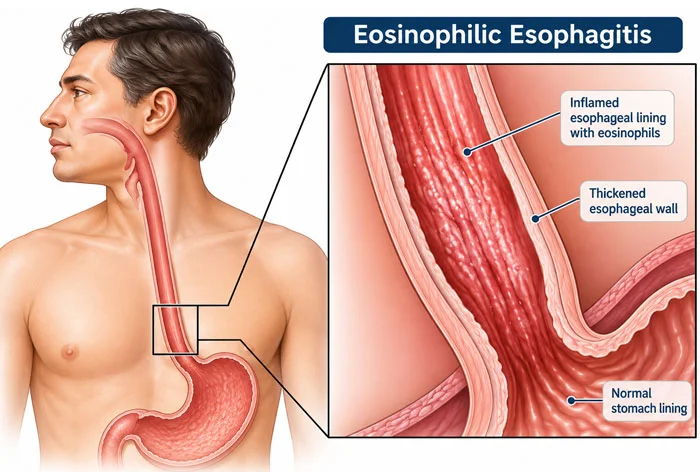
Eosinophilic esophagitis (EoE) is a chronic inflammatory condition of the esophagus in which a type of white blood cell called eosinophils builds up in the lining of the esophagus. This inflammation can interfere with normal swallowing and may cause food to become stuck in the esophagus.
EoE can occur in both children and adults. It is often associated with allergic or immune-related conditions and may cause persistent swallowing difficulties, chest discomfort, heartburn-like symptoms, or food impaction.
Symptoms of Eosinophilic Esophagitis
Symptoms can vary depending on age and the severity of inflammation. Common symptoms include:
- Difficulty Swallowing: Food may feel difficult to pass through the esophagus, particularly solid foods.
- Food Getting Stuck: Food may become lodged in a narrowed or inflamed esophagus.
- Chest Discomfort: Some patients experience chest pain or discomfort that may resemble heartburn.
- Heartburn-Like Symptoms: Burning or discomfort behind the breastbone may occur.
- Regurgitation: Food or liquid may come back into the mouth after swallowing.
- Abdominal Pain: Children may report stomach or upper abdominal discomfort.
- Slow Eating: Some patients may take an unusually long time to finish meals because of swallowing difficulties.
- Weight Loss: Persistent difficulty eating may result in inadequate nutritional intake and weight loss.
Causes and Risk Factors
The exact cause of eosinophilic esophagitis is not completely understood. It is thought to result from an abnormal immune response, often associated with food or environmental allergens.
- Food Allergies: Certain foods may trigger an immune response and inflammation in the esophagus.
- Environmental Allergies: Allergens such as pollen, dust mites, or other environmental triggers may contribute in some patients.
- Atopic Conditions: EoE is more common in people with conditions such as asthma, eczema, allergic rhinitis, or food allergies.
- Immune Response: An abnormal immune reaction can cause eosinophils to accumulate in the esophageal lining.
- Family History: EoE may occur more frequently in some families.
Diagnosis of Eosinophilic Esophagitis
Diagnosis is based on symptoms, endoscopic findings, and microscopic examination of tissue samples from the esophagus.
- Upper GI Endoscopy: Endoscopy allows the specialist to examine the esophageal lining for characteristic changes such as rings, grooves, swelling, or narrowing.
- Esophageal Biopsy: Small tissue samples are taken from different areas of the esophagus and examined under a microscope for increased eosinophils and inflammation.
- Blood Tests: Blood tests may be used to assess allergic or inflammatory conditions, although they cannot by themselves confirm EoE.
- Allergy Evaluation: Allergy assessment may be considered to identify possible food or environmental triggers.
- Additional Testing: Other investigations may be recommended when symptoms overlap with reflux, strictures, or esophageal motility disorders.
Endoscopic Features
Eosinophilic esophagitis can produce characteristic changes in the esophageal lining. These findings may include:
- Esophageal Rings: Concentric rings may give the esophagus a ringed appearance.
- Linear Furrows: Vertical grooves may be visible along the esophageal lining.
- White Spots or Exudates: Small white areas may represent collections of inflammatory cells.
- Edema: The esophageal lining may appear swollen and less vascular.
- Narrowing: Chronic inflammation can lead to a narrowed esophageal passage.
- Fragile Mucosa: The lining may become more delicate and prone to injury during endoscopy.
Treatment Options
The goals of treatment are to reduce inflammation, improve swallowing symptoms, prevent food impaction, and reduce the risk of long-term esophageal narrowing.
- Proton Pump Inhibitors: Acid-suppressing medicines may reduce symptoms and esophageal inflammation in some patients.
- Swallowed Topical Steroids: Certain corticosteroids can be swallowed rather than inhaled to deliver anti-inflammatory treatment directly to the esophagus.
- Dietary Therapy: Elimination diets may be used to identify and avoid foods that trigger inflammation.
- Biologic Therapy: Selected patients with persistent or severe EoE may be considered for targeted biologic treatment.
- Esophageal Dilatation: Patients with significant narrowing or strictures may benefit from carefully performed endoscopic dilatation.
- Long-Term Maintenance: Ongoing treatment may be recommended because EoE is a chronic condition and inflammation can return after treatment is stopped.
Dietary Management
Dietary therapy can be an important part of EoE management. The appropriate approach should be individualized according to the patient's age, nutritional needs, symptoms, and identified food triggers.
- Elimination Diet: Specific foods may be temporarily removed from the diet and gradually reintroduced under medical guidance.
- Targeted Food Avoidance: Foods identified as potential triggers may be avoided when appropriate.
- Nutritional Support: Dietary changes should maintain adequate calories, protein, vitamins, and minerals.
- Dietitian Guidance: A dietitian may help patients follow an elimination diet safely and maintain balanced nutrition.
Esophageal Dilatation
Chronic inflammation from EoE can cause scar tissue and narrowing of the esophagus. Endoscopic dilatation may be used in patients with significant strictures or a narrowed esophageal passage.
Dilatation can improve swallowing by widening the narrowed segment, but it does not treat the underlying inflammation. Therefore, anti-inflammatory treatment is generally important alongside dilatation when appropriate.
Possible Complications
Without appropriate treatment, persistent eosinophilic inflammation may lead to structural changes in the esophagus.
- Food Impaction: Food may become stuck in a narrowed esophagus and may require urgent endoscopic removal.
- Esophageal Stricture: Long-standing inflammation can result in scar tissue and narrowing.
- Difficulty Swallowing: Progressive narrowing may cause worsening dysphagia.
- Esophageal Remodeling: Chronic inflammation can cause changes in the structure and flexibility of the esophageal wall.
- Weight Loss: Avoidance of foods or persistent swallowing difficulties may result in inadequate nutritional intake.
- Reduced Quality of Life: Persistent symptoms and dietary restrictions can affect eating habits and daily activities.
Long-Term Management
Eosinophilic esophagitis is generally considered a chronic condition that requires ongoing management. Symptoms may improve with treatment, but inflammation can recur if treatment is discontinued.
Regular follow-up with a gastroenterologist may include assessment of symptoms, nutritional status, endoscopy, and biopsies when clinically indicated.
When to Consult a Specialist?
Persistent difficulty swallowing, recurrent food getting stuck, unexplained weight loss, chest discomfort, or ongoing heartburn-like symptoms should be evaluated by a gastroenterologist.
Early diagnosis and appropriate treatment of eosinophilic esophagitis can help control inflammation, improve swallowing, and reduce the risk of esophageal narrowing and food impaction.