Colonoscopy
Colonoscopy
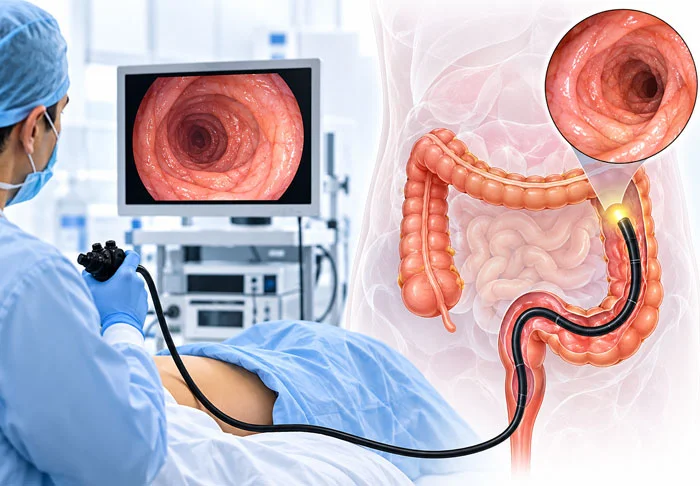
Colonoscopy is an endoscopic procedure used to examine the inner lining of the large intestine, including the rectum and colon. It is performed using a thin, flexible tube called a colonoscope, which has a camera and light at its tip.
The procedure allows a gastroenterologist to directly visualize the colon and identify conditions such as polyps, inflammation, bleeding, ulcers, diverticular disease, and abnormal growths.
Colonoscopy can also be used for treatment during the same procedure. Depending on the findings, the doctor may remove polyps, take tissue biopsies, or control certain sources of bleeding.
Why is Colonoscopy Performed?
A colonoscopy may be recommended to investigate symptoms, evaluate abnormal test results, or screen for colorectal cancer and precancerous polyps.
- Rectal bleeding: To identify the possible source of blood in the stool.
- Change in bowel habits: To investigate persistent constipation, diarrhea, or changes in stool pattern.
- Unexplained abdominal pain: To evaluate persistent or recurrent lower abdominal symptoms.
- Unexplained weight loss: To investigate possible gastrointestinal causes.
- Iron-deficiency anemia: To look for possible gastrointestinal blood loss.
- Positive stool blood test: To investigate occult blood detected in stool.
- Abnormal imaging: To further evaluate abnormalities seen on CT scans or other investigations.
- Colorectal cancer screening: To detect precancerous polyps and colorectal cancer at an early stage.
- Follow-up of previous polyps: To monitor patients with a history of colorectal polyps.
What Does Colonoscopy Examine?
During colonoscopy, the colonoscope is gently advanced through the rectum into the large intestine. The doctor examines the lining of the bowel carefully for abnormalities.
Rectum
The rectum is examined for inflammation, polyps, bleeding, ulcers, abnormal growths, and other changes.
Colon
The different sections of the colon are examined for polyps, tumors, inflammation, diverticular disease, bleeding sites, and changes in the intestinal lining.
Cecum
The colonoscope is generally advanced up to the cecum, allowing examination of the beginning of the large intestine and the area near the opening of the small intestine.
Conditions That Can Be Evaluated
Colonoscopy can help diagnose or evaluate a wide range of conditions affecting the large intestine, including:
- Colorectal polyps
- Colorectal cancer
- Ulcerative colitis
- Crohn's disease
- Colitis
- Diverticular disease
- Lower gastrointestinal bleeding
- Unexplained anemia
- Changes in bowel habits
- Other abnormalities of the colon and rectum
Polyp Detection and Removal
One of the important benefits of colonoscopy is the ability to detect and remove colorectal polyps. Some types of polyps can develop into colorectal cancer over time.
When appropriate, polyps can be removed during colonoscopy using specialized instruments. The removed tissue is then sent for histopathological examination to determine its type and characteristics.
Removing precancerous polyps can help reduce the future risk of colorectal cancer.
Biopsy During Colonoscopy
During the procedure, the gastroenterologist may take small tissue samples called biopsies from areas that appear abnormal or from normal-appearing bowel lining when clinically indicated.
Biopsies may help evaluate conditions such as inflammatory bowel disease, microscopic colitis, infections, abnormal tissue changes, and suspected cancers.
Colonoscopy for Gastrointestinal Bleeding
Colonoscopy can help identify the source of lower gastrointestinal bleeding. The doctor may identify bleeding from polyps, diverticular disease, inflammation, vascular abnormalities, or other lesions.
When an active bleeding source is identified, certain endoscopic techniques may be used to control the bleeding.
Preparation Before Colonoscopy
Proper bowel preparation is essential for a clear and complete examination. Patients are generally asked to follow a specific low-residue or clear-liquid diet before the procedure and take a prescribed bowel-cleansing preparation.
The bowel preparation helps clear stool from the colon so that the doctor can clearly visualize the intestinal lining and detect small polyps or other abnormalities.
Patients should inform the doctor about all medications they are taking, especially blood thinners, diabetes medicines, and other medicines that may require adjustment.
The exact preparation instructions may vary depending on the patient's health, medications, and planned procedure.
What Happens During Colonoscopy?
Before the procedure, the patient is positioned comfortably and vital signs such as blood pressure, pulse, and oxygen levels are monitored.
Sedation is commonly provided to improve comfort. The colonoscope is then gently introduced through the anus and carefully advanced through the rectum and colon.
The doctor examines the bowel lining while slowly withdrawing the colonoscope. If necessary, biopsies, polyp removal, or treatment of bleeding can be performed during the same procedure.
The duration of colonoscopy can vary depending on bowel preparation, anatomy, findings, and whether additional procedures are required.
After the Procedure
Following colonoscopy, patients are usually monitored for a short period until the effects of sedation begin to wear off.
Mild bloating, gas, or abdominal discomfort may occur temporarily because air or carbon dioxide is introduced into the colon during the examination.
If sedation has been used, patients may need someone to accompany them home and should follow the post-procedure instructions provided by the medical team.
The doctor may discuss the initial findings after the procedure. If biopsies or polyps were removed, the final laboratory report may take additional time.
Benefits of Colonoscopy
- Direct examination: Provides detailed visualization of the colon and rectum.
- Early detection: Helps identify colorectal polyps and cancer at an early stage.
- Polyp removal: Many polyps can be removed during the same procedure.
- Biopsy: Tissue samples can be collected for further examination.
- Bleeding evaluation: Helps identify the source of lower gastrointestinal bleeding.
- Therapeutic capability: Selected bleeding lesions and other abnormalities can be treated endoscopically.
- Comprehensive assessment: Allows examination of the entire colon when technically possible.
Possible Risks and Complications
Colonoscopy is generally considered a safe procedure, but complications can occasionally occur. The risk may depend on the patient's health and whether additional procedures such as polyp removal are performed.
- Temporary bloating or abdominal discomfort
- Reaction to sedation or medications
- Bleeding, particularly after polyp removal or biopsy
- Infection in selected circumstances
- Perforation of the colon, which is uncommon
The gastroenterologist will explain the procedure, expected benefits, and individual risks before colonoscopy.
Colonoscopy for Colorectal Cancer Screening
Colonoscopy is an important tool for colorectal cancer screening. It can detect precancerous polyps and early cancers before they cause noticeable symptoms.
Screening recommendations depend on factors such as age, family history, personal history of polyps or colorectal cancer, and other individual risk factors.
Your gastroenterologist can advise on the appropriate screening strategy and interval based on your individual risk profile.
When Should You Consult a Gastroenterologist?
Patients with rectal bleeding, persistent changes in bowel habits, unexplained anemia, recurrent abdominal pain, unexplained weight loss, blood in the stool, or a family or personal history of colorectal polyps or cancer may require further evaluation.
A gastroenterologist can assess the symptoms and medical history and determine whether colonoscopy or another diagnostic investigation is appropriate.
Conclusion
Colonoscopy is an important diagnostic, screening, and therapeutic procedure used to examine the colon and rectum. It can help detect polyps, colorectal cancer, inflammation, bleeding, and other bowel conditions.
Because biopsies and selected treatments can often be performed during the same procedure, colonoscopy provides both diagnostic and therapeutic benefits. Appropriate preparation and timely evaluation can help ensure an effective and comprehensive examination.