Exploring ERCP: A Quick Patient Guide
ERCP, or Endoscopic Retrograde Cholangiopancreatography, is a procedure where doctors use a camera and X-rays to check your digestive system’s tubes.
How ERCP Works
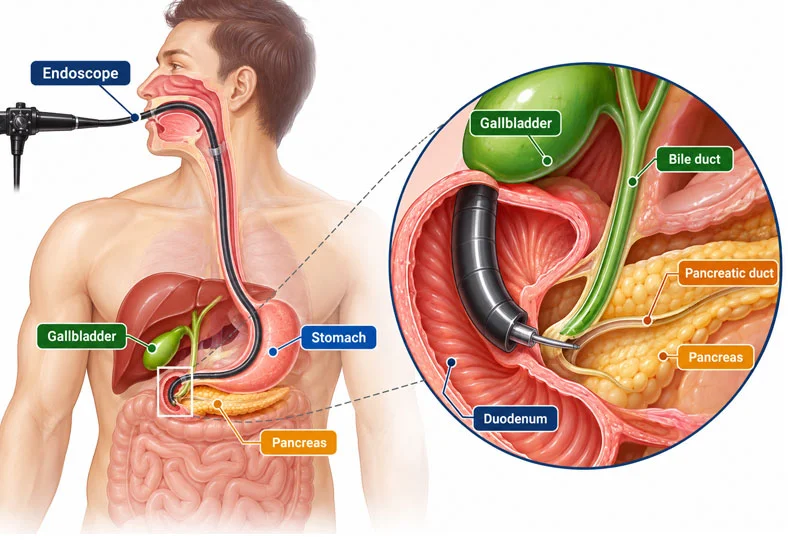
A tiny camera on a flexible tube is put through your mouth, going into your stomach and upper intestine. Dye is added, making your tubes show up on X-rays. This helps doctors spot issues like blockages, stones, or tumors.
When ERCP is Used
Doctors use ERCP when they think there might be problems with the tubes that connect your liver, gallbladder, and pancreas to your intestines. It’s used for things like gallstones, pancreatitis, and certain tumors.
Why ERCP Makes Sense
ERCP has benefits like avoiding big surgeries, seeing issues directly, helping treat blockages, and putting in small tubes to keep things open.
- Avoiding major surgery in suitable cases
- Directly seeing the affected area
- Helping treat blockages
- Placing small tubes to help keep ducts open
ERCP can be used not only to identify certain problems but also to help treat blockages and other conditions affecting the digestive system’s ducts.
During the Procedure
Before ERCP, you’ll get instructions on preparing. The actual procedure takes around 30 to 90 minutes, and you’ll be made comfortable with sedation.
After the procedure, you might feel a bit sleepy, so have someone ready to drive you home.
Conclusion
In short, ERCP is a way for doctors to see what’s going on inside your digestive tubes. If your doctor talks about ERCP, it’s a useful step to figure out what’s causing problems and help guide appropriate treatment.